
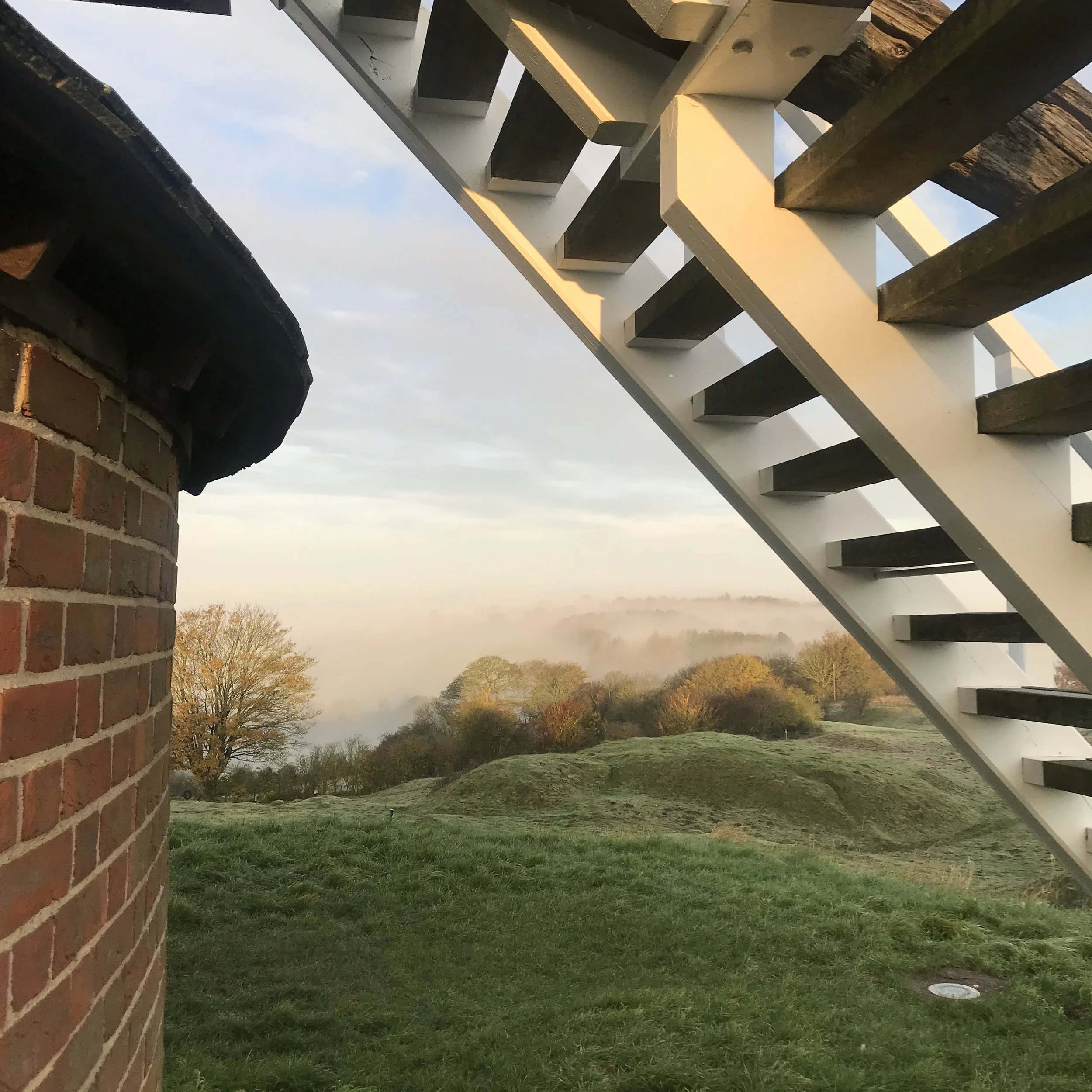
Autumn’s Abundance
The soft, silvery seed heads of Traveller’s Joy appear in the hedgerows and Hedgehogs are in foraging overdrive.
This week, my husband and I went to hear Kate Mosse speak at the Henley Literary Festival programme. I adore her writing and, while she is perhaps best known for her historical fiction (including the Languedoc Trilogy, which are personal favourites of mine) she was there to talk about her new book Autumn: The Story of a Season*. This is an exploration of nature, the changing landscape, folklore and history of her native and much-loved Sussex.
Autumn is a deeply special season for me and my family. It was my late father’s favourite time of year, drawn as he was to the changing kaleidoscope of colours across the landscape. It’s since become a tradition for my husband and I to perform our own autumn ritual; spinning in circles and kicking leaves at each other brings out the inner child in both of us!
During spring and summer, leaves are full of chlorophyll, the green pigment that helps trees make food from sunlight. As autumn arrives cooler weather signals trees to prepare for winter. Chlorophyll production stops and the existing pigment breaks down, revealing the vibrant colours beneath – the yellows, oranges, reds and purples that I love so much, before the trees shed their leaves and prepare for their winter dormancy.
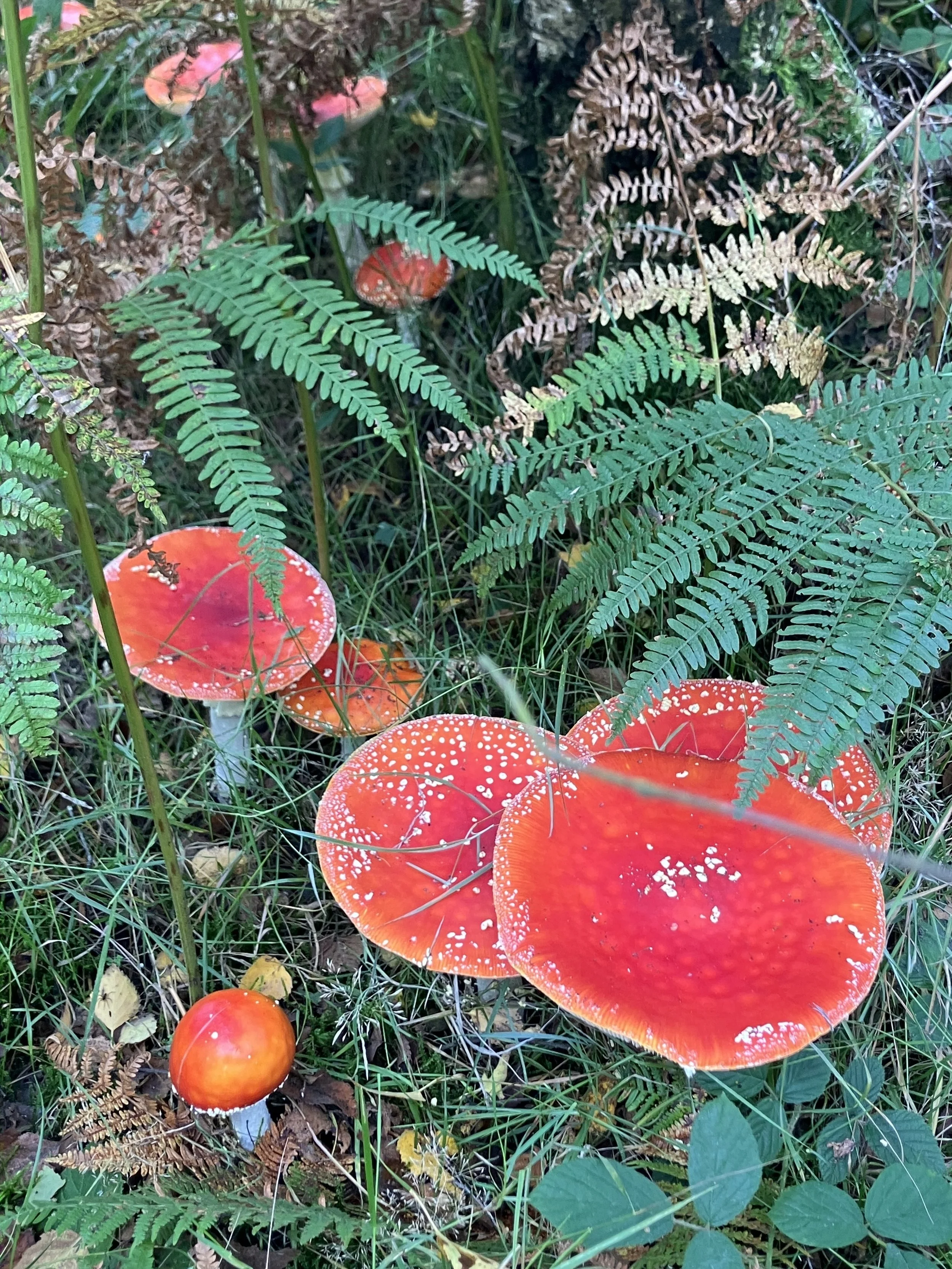
Sloes and Sweet Chestnuts
Near my home, Fallow Deer begin to rut, their haunting calls reverberating across the valleys where we walk the dogs. The soft, silvery seed heads of Traveller’s Joy appear in the hedgerows and Hedgehogs are in foraging overdrive, building up their fat reserves before hibernation begins in November.
Autumn is also a wonderful time for humans to forage. Sloes are ripe for the picking and sweet chestnuts will soon drop (we love roasting them over an open fire outside) - and have you ever harvested rosehips? These can be made into a delicious syrup, naturally high in vitamin C and well worth the effort! During the Second World War, when citrus fruits were in short supply, the Government launched a National Rose-Hip Gathering campaign, with pickers paid 3d for every pound of hips collected.
I love the changing seasons and the beat of nature’s heart reassuring me that everything carries on. There is something rather wonderful about simply being outside, being present and watching it all unfold.
Enjoy Autumn
For tried-and-tested recipes, I recommend and use The Forager’s Calendar by John Wright. Click through the website for a wealth of other information.
*Winter and Spring are also available, written by other authors.
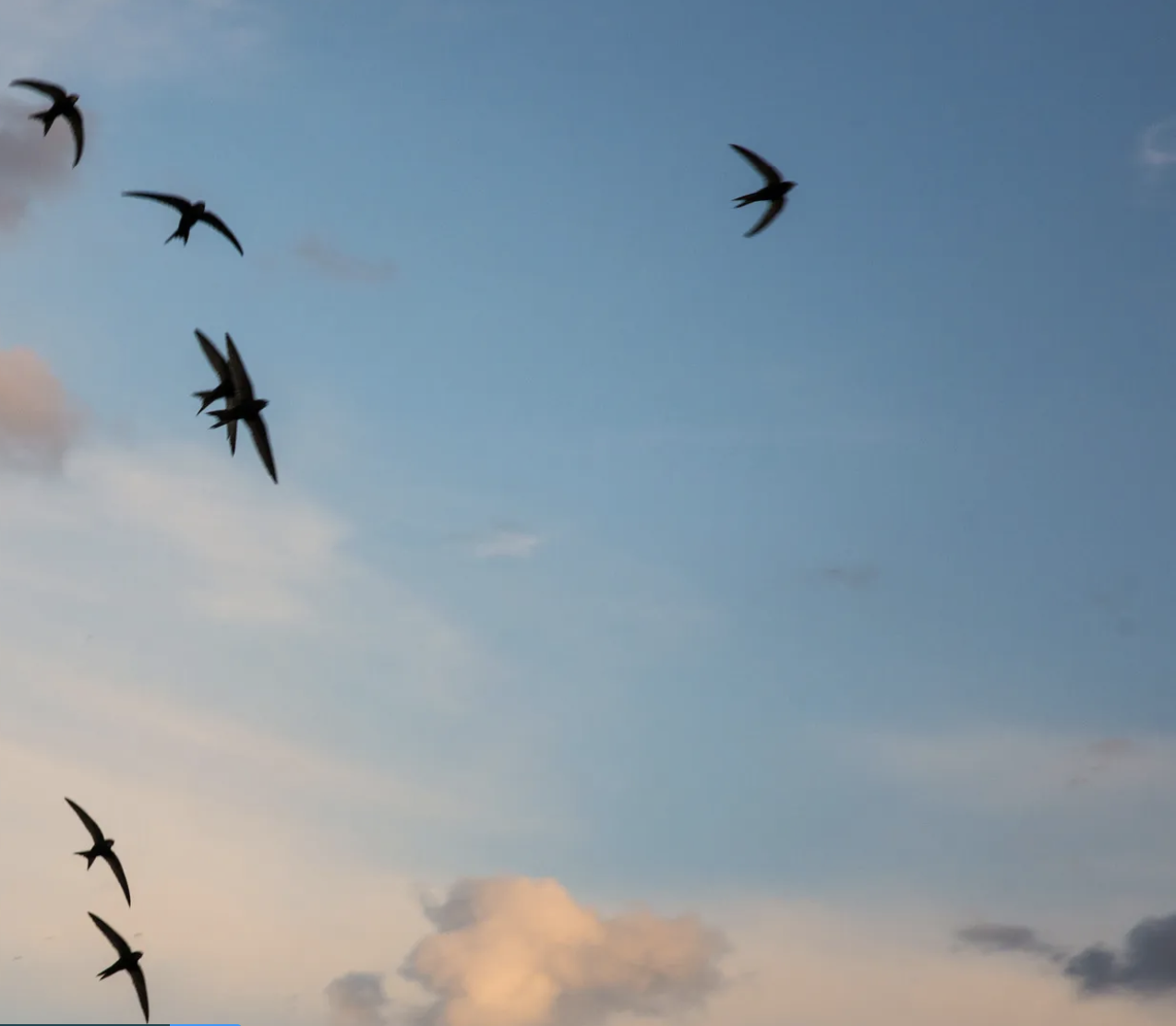
Swift Action
This sort of conservation work has the potential to bring communities together - and reconnect us with the wildlife on our doorsteps.
The recent screening of The People’s Emergency Briefing in Brill got me thinking about the positive things we can do right here to mitigate, in a small way, the impact of the climate and nature crisis. Creating better habitats to give nature a helping hand may not change everything but can make a real difference locally. Furthermore, this sort of conservation work has the potential to bring communities together - and reconnect us with the wildlife on our doorsteps.
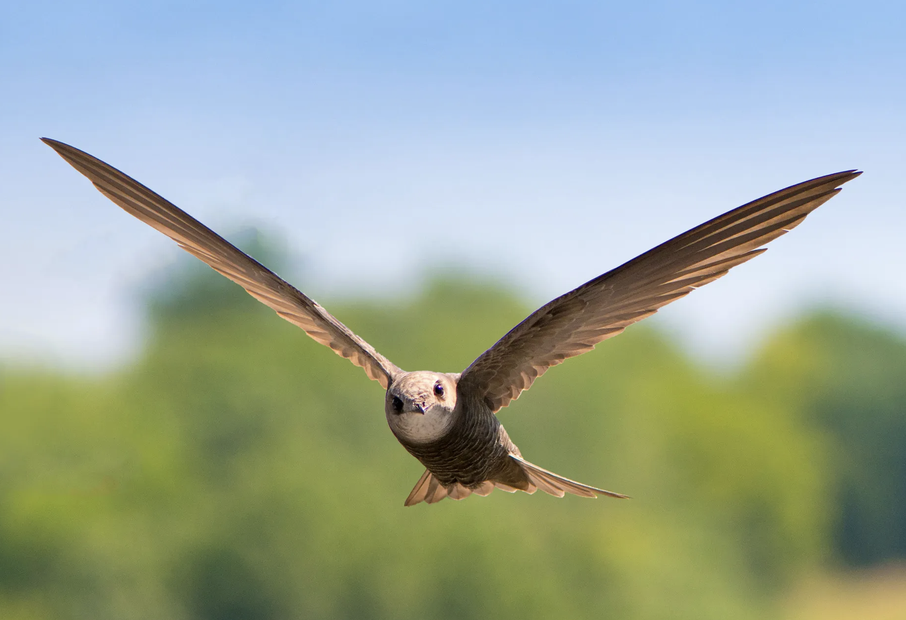
Swifts are significantly larger than House Martins and Swallows and their call is an unmistakable, high-pitched ‘scream’. Photo from RSPB website.
I’d like to introduce you to a project that Barbara, a friend and previous work colleague at BBOWT, has been facilitating in Crowthorne, Berkshire. Barbara’s wildlife community work always inspires me and the Swift Street project is no exception.
Community action
Swifts are incredible birds, spending almost their entire lives on the wing and returning to the same area to breed year after year. They arrive in the UK in May, having travelled thousands of miles from Sub-Saharan Africa, to look for suitable places to raise their young. The problem is that modern buildings lack the nooks and crannies in which Swifts like to nest and so we’ve lost 60% of our Swifts in the past 25 years.
The Crowthorne Swift Street project is a community-led initiative to help bring swifts back to the town by providing purpose-built nesting boxes and call systems. Working with residents, businesses, the local Men’s Shed, the Parish Council and the Fire Service, BBOWT has so far helped install eleven Swift boxes in the village.
I’d love to start a similar project here in Brill! How about making Brill a community that really welcomes Swifts, with residents, businesses and community groups all playing a part? Recording nesting sites, building Swift boxes and fixing them to buildings, recording sightings - or simply learning more about these amazing birds; there’s something everyone can do.
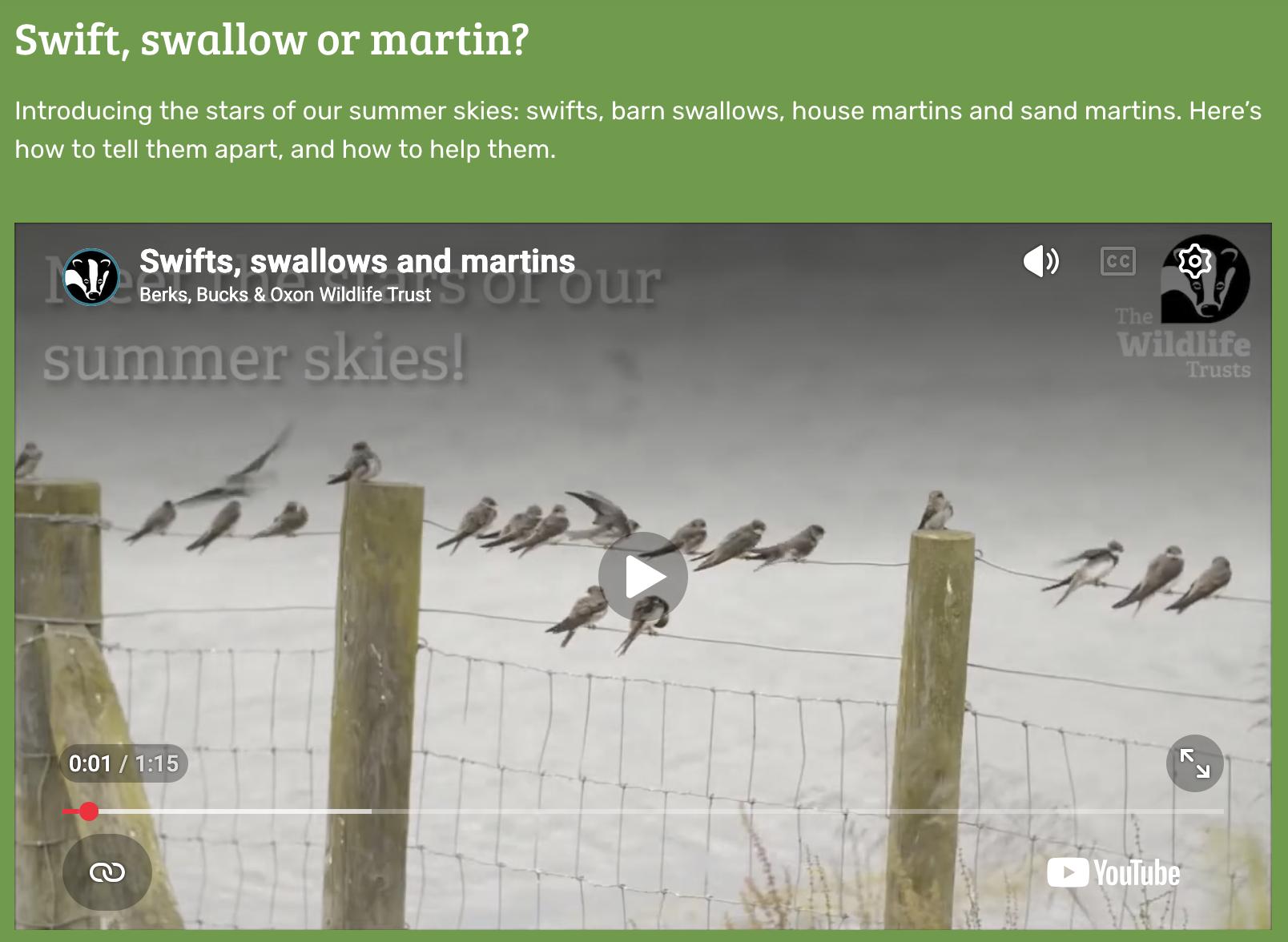
Swift, House Martin or Swallow? Check this BBOWT article - or click the image above to watch a short You Tube video.
What to do now
If you’ve seen Swifts around Brill or know of a nesting site, remember Swifts in years gone by or would like to welcome Swifts to Brill in the future, please email me - and come along to Barbara’s talk on November 10th (see posters). Let’s make this happen together!
Here’s a wonderful fact to finish with: in a single lifetime, a Swift can fly 2,000,000 miles; the equivalent of travelling to the Moon and back four times!
PS! Next year I’d like to link this project with House Martins, another wonderful bird that needs our help. In the meantime, please record House Martin nests on the House Martin Conservation Interactive Map.
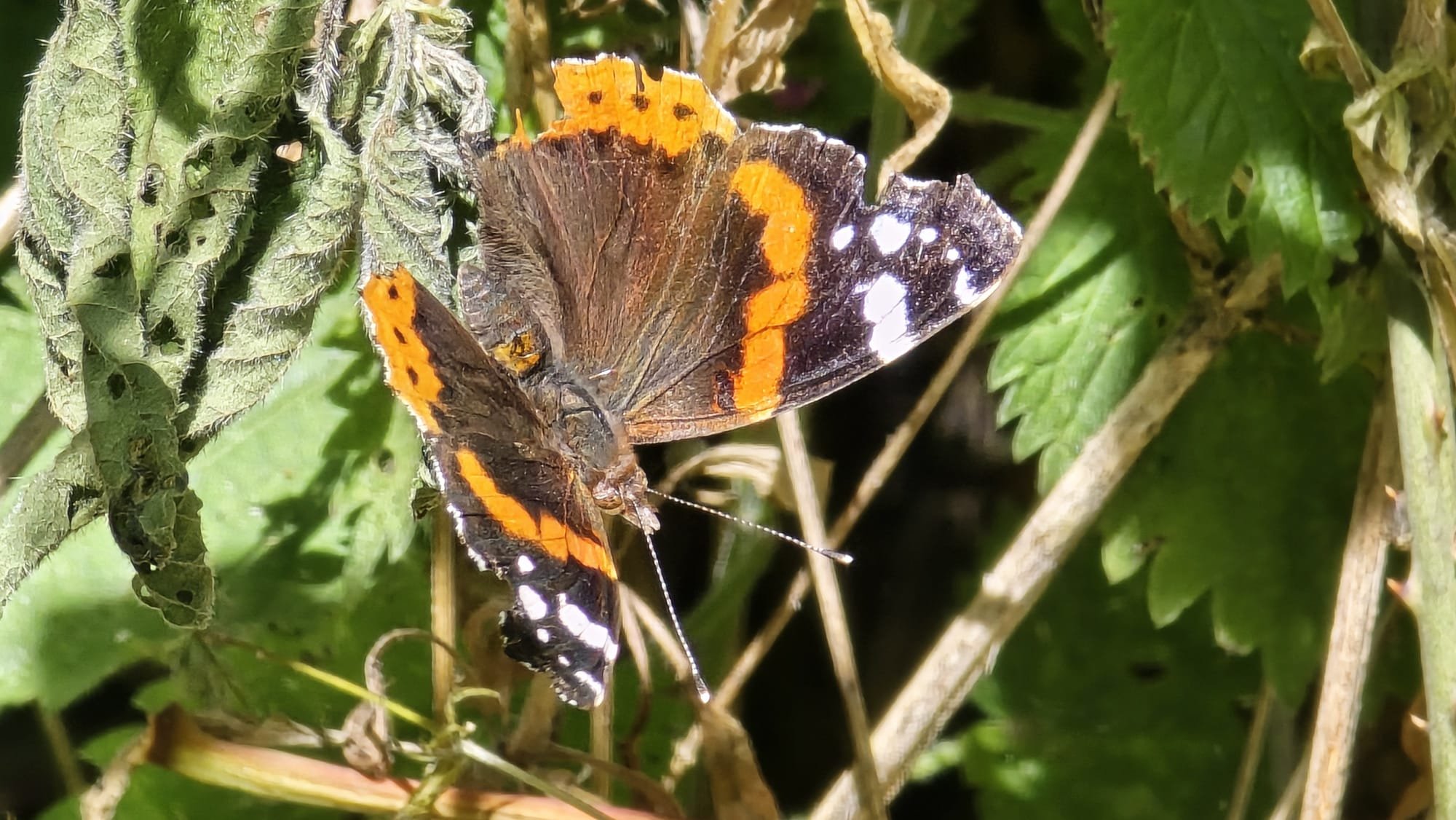
The Butterfly Effect
Every butterfly counts, and so does every person taking part in the Big Butterfly Count - so what are you waiting for? Get outside and get counting!
Wildflowers are at their peak and our countryside is a vibrant mosaic of colour, accompanied by the constant hum and buzz of insects making the most of this seasonal abundance. Among the easiest and most rewarding insects to spot are butterflies, with their incredible variety of shapes, sizes and colours.
Butterflies rely on a rich diversity of plants throughout their lives. Caterpillars need specific food plants to grow and develop whilst adults seek out nectar-rich flowers to provide vital energy to fuel their flights, find a mate and survive. Without a healthy mix of larval food plants and nectar sources, many butterfly species simply would not thrive.
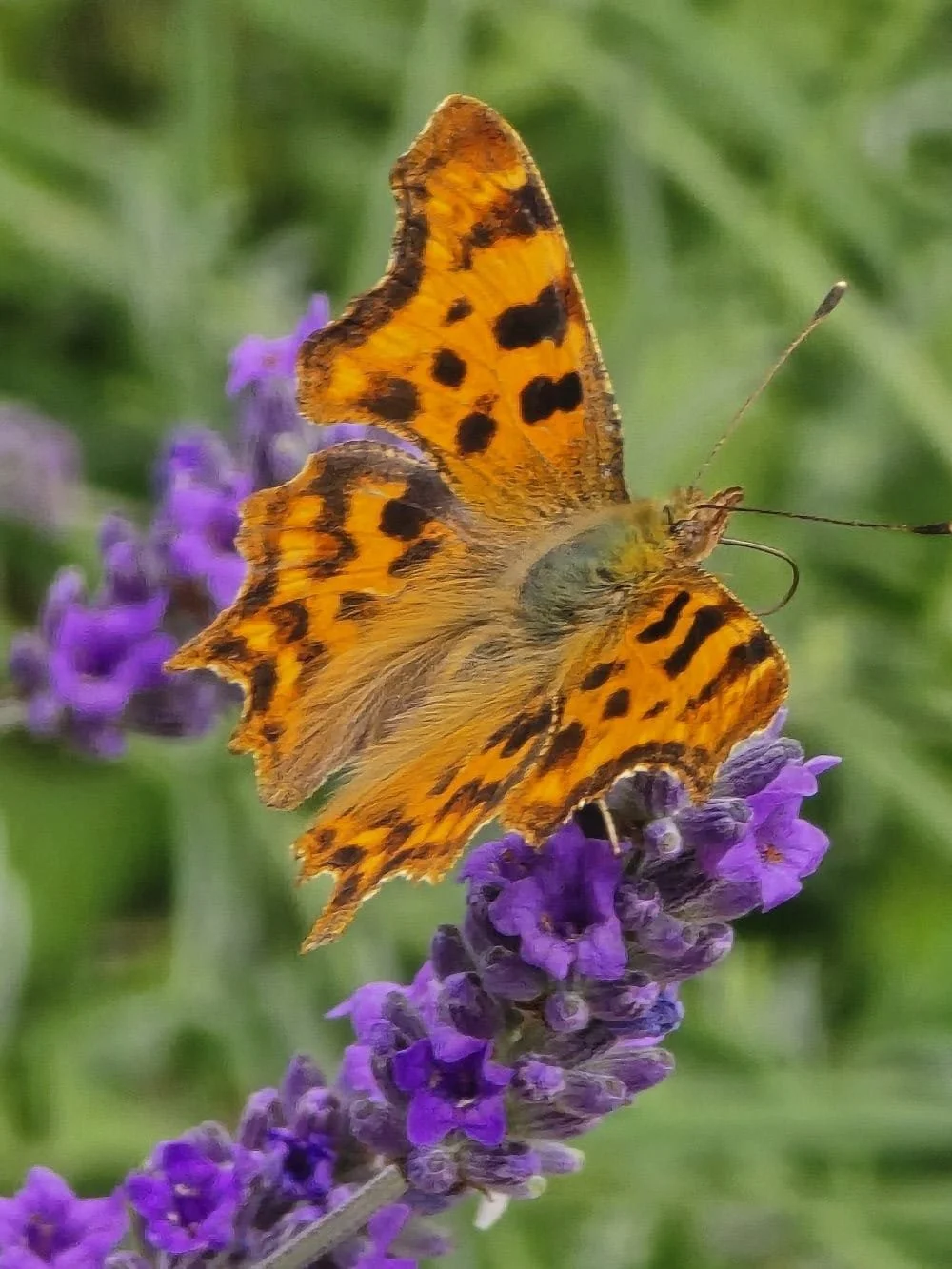
Comma Butterfly on lavender in Fiona’s garden
Butterfly watching
Monitoring butterflies is incredibly important not only to keep an eye on their number and variety but because butterflies are key indicators of biodiversity. An annual record of the abundance and diversity of butterflies helps build a picture of the health of the wider environment.
How are butterfly populations monitored?
We are fortunate to have dedicated volunteers to carry out butterfly transects on Brill Common. A butterfly transect is a fixed-route walk completed every week from April to September. Although each survey has specific criteria, the basic principle is straightforward: every butterfly seen within a standard recording area - an imaginary 5m cube - is identified and counted. The same route and method are repeated each week to produce reliable data that can be compared over time.
This methodology forms the backbone of the UK Butterfly Monitoring Scheme (UKBMS), one of the world's longest-running insect monitoring programmes.
So how can I help?
The annual Big Butterfly Count (website opens in new tab) is about to begin, and they need YOU!
All you have to do is spend 15 minutes in a sunny spot in your garden, on Brill Common, in The Walks or any other open space and record the butterflies and day-flying moths you see. When you've finished, upload your sightings to the Big Butterfly Count website or use the free iOS or Android app. There’s an interactive map on the website showing how your records contribute to a picture of butterfly populations across the UK.
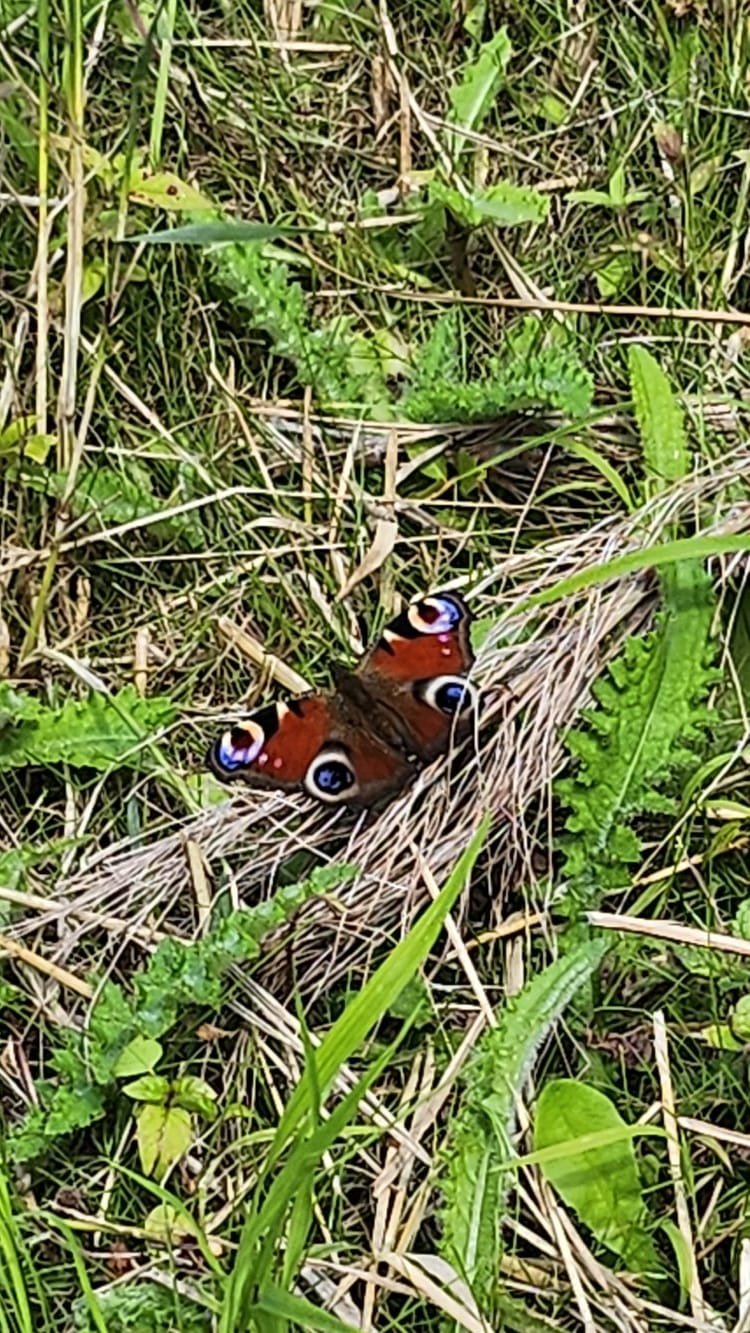
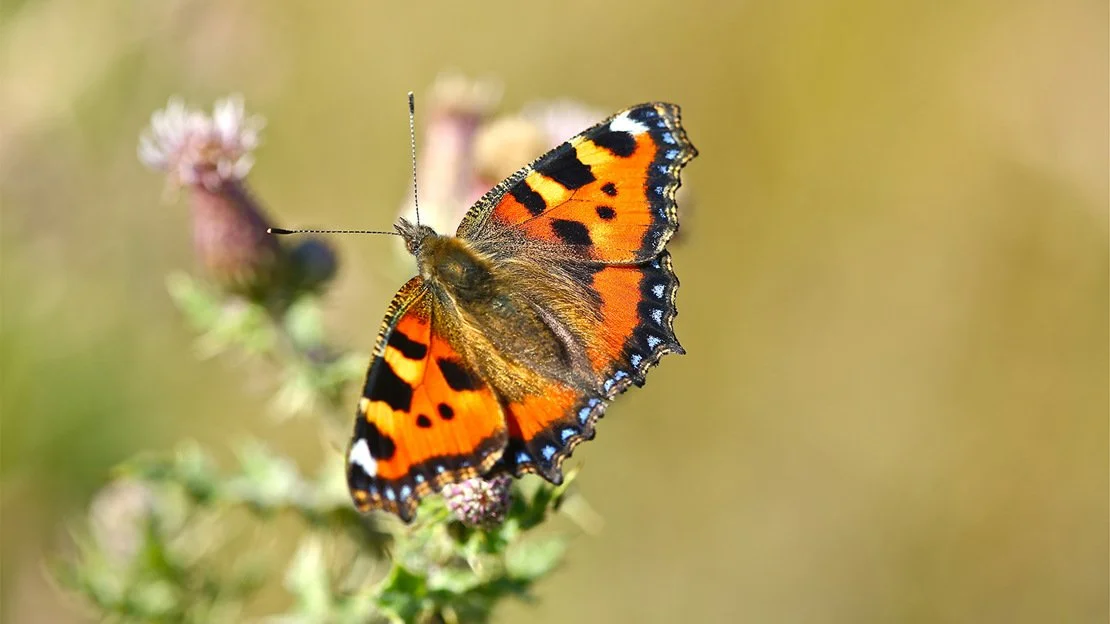
Peacock Butterflies are easy to spot in Brill!
Every butterfly counts, and so does every person taking part - so what are you waiting for? Get outside and get counting!
Resources
🦋 Big Butterfly Count ID Chart for England (pdf opens in new tab)
🦋 Identifying butterflies is fun but can be quite bewildering! This Butterfly Conservation Identify a Butterfly interactive tool is excellent (website opens in new tab).
🦋 A delightful child-friendly spotter sheet (pdf opens in new tab) from Munching Caterpillars (website opens in new tab), the educational arm of Butterfly Conservation. Visit the Munching Caterpillars website for lots of other activities for children and families.
Bitten by the butterfly bug?
Why not build a Butterfly Feeder? Try this simple Wildlife Trust Butterfly Feeder (pdf opens in new tab) - or tackle this slightly more complicated Butterfly Café from the RSPCA (website opens in new tab).
Why a Little Wildness Matters
Pretty wildflowers may attract the most attention but a healthy ecosystem depends on variety. Even over-looked plants - so-called “weeds” - play their part.
Pretty wildflowers may attract the most attention but a healthy ecosystem depends on variety. Even over-looked plants - so-called “weeds” - play their part. Stinging nettles, for example, support more than 40 insect species and provide food and shelter for other wildlife. By allowing a little wildness into our green spaces - public and private - we create irreplaceable habitats and a thriving eco-system.
No Mow May
No Mow May has now finished. A nation-wide campaign led by Plantlife, every year No Mow May encourages us to pause mowing and allow wildflowers to bloom, providing nectar and shelter for pollinators. But supporting wildlife doesn’t stop on May 31st: We’re now in Let It Bloom June!
Let it Bloom June (also promoted by Plantlife) is all about rethinking how we manage green spaces throughout the growing season. It encourages us to see our surroundings differently. Rather than viewing every patch of greenery as something to be controlled, we can start seeing it as valuable habitat - and, in a village like Brill where the landscape and community are closely intertwined, that shift in perspective can as important as any wider management decision.
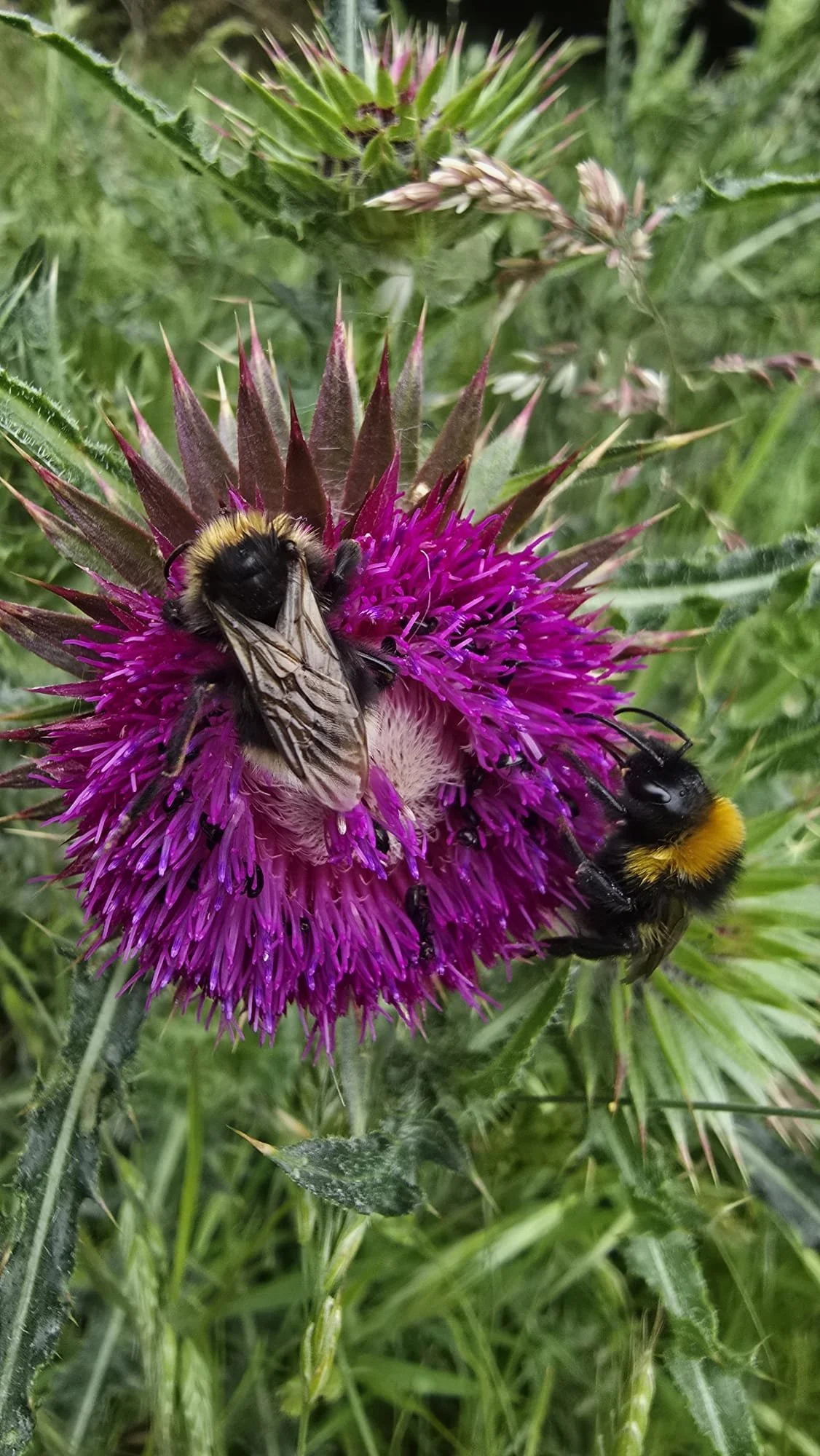
Two species of Bumblebees feeding on the nectar of a Musk Thistle on The Walks a day or so ago - and note the tiny Pollen Beetles on the petals. So much happening on one small flower!
(Photo F B-M.)
Let It Bloom June
We’re not neglecting ground that is left a little wild, we’re giving nature a chance to recover from a century of wildflower meadow depletion. Our efforts - or rather, lack of effort! - is quickly rewarded by the hum of pollinators, an abundance of wildflowers, and a growing variety of wildlife.
Why not join in with Let it Bloom June? Leave a corner of your garden uncut, allow nettles to flourish in an unused spot - or simply appreciate the movement and beauty of longer grass. Small changes can make a huge difference, I promise. Every wildflower left to bloom is a small step towards a wilder, richer Brill.
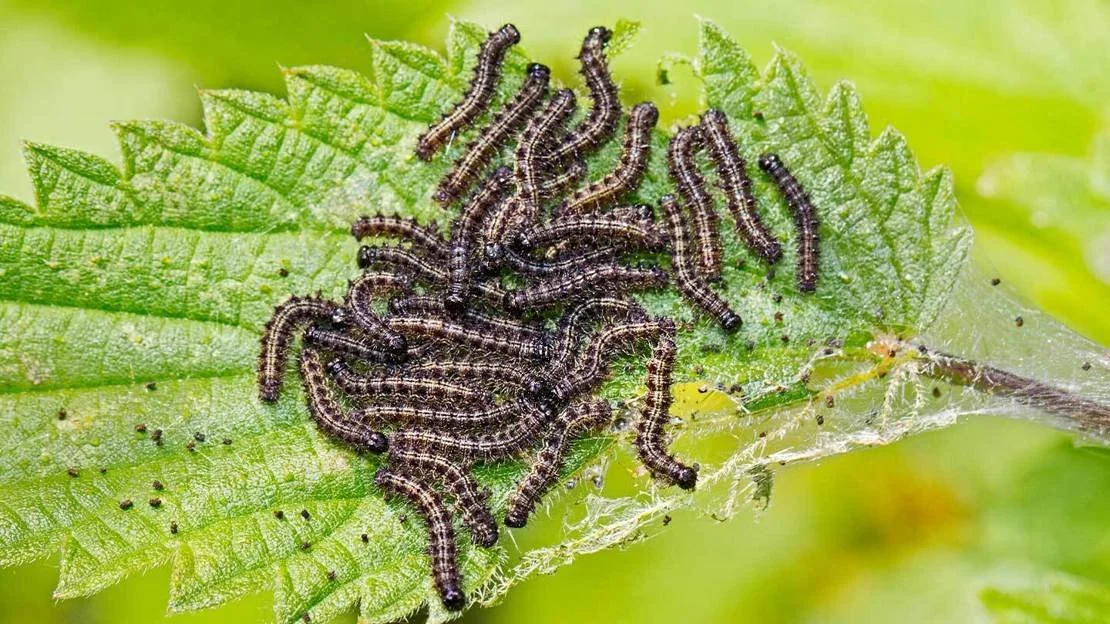
Small Tortoiseshell caterpillars; just one of a number of species who depend on stinging nettles, along with the caterpillars of Peacock, Red Admiral, Comma and Painted Lady butterflies. (Photo by Rod Williams on The Woodland Trust website.)
Brill Common this month
Our common is looking splendid right now; swathes of wildflowers, a rich diversity of plants and grasslands full of life. It’s so rewarding to see the impact of conservation work and countless volunteer hours reflected in the landscape.
This month we’ll be carrying out detailed habitat surveys and comparing what we find with historical records. This work helps us understand how habitats are changing and ensures we continue to manage Brill Common for the widest possible range of wildlife.
Do come and say Hello if you see me - and, whilst you’re out and about, see if you can spot Small Tortoiseshell caterpillars and butterflies. (Other butterflies are available! There’s an excellent identification guide on The Woodland Trust website.)
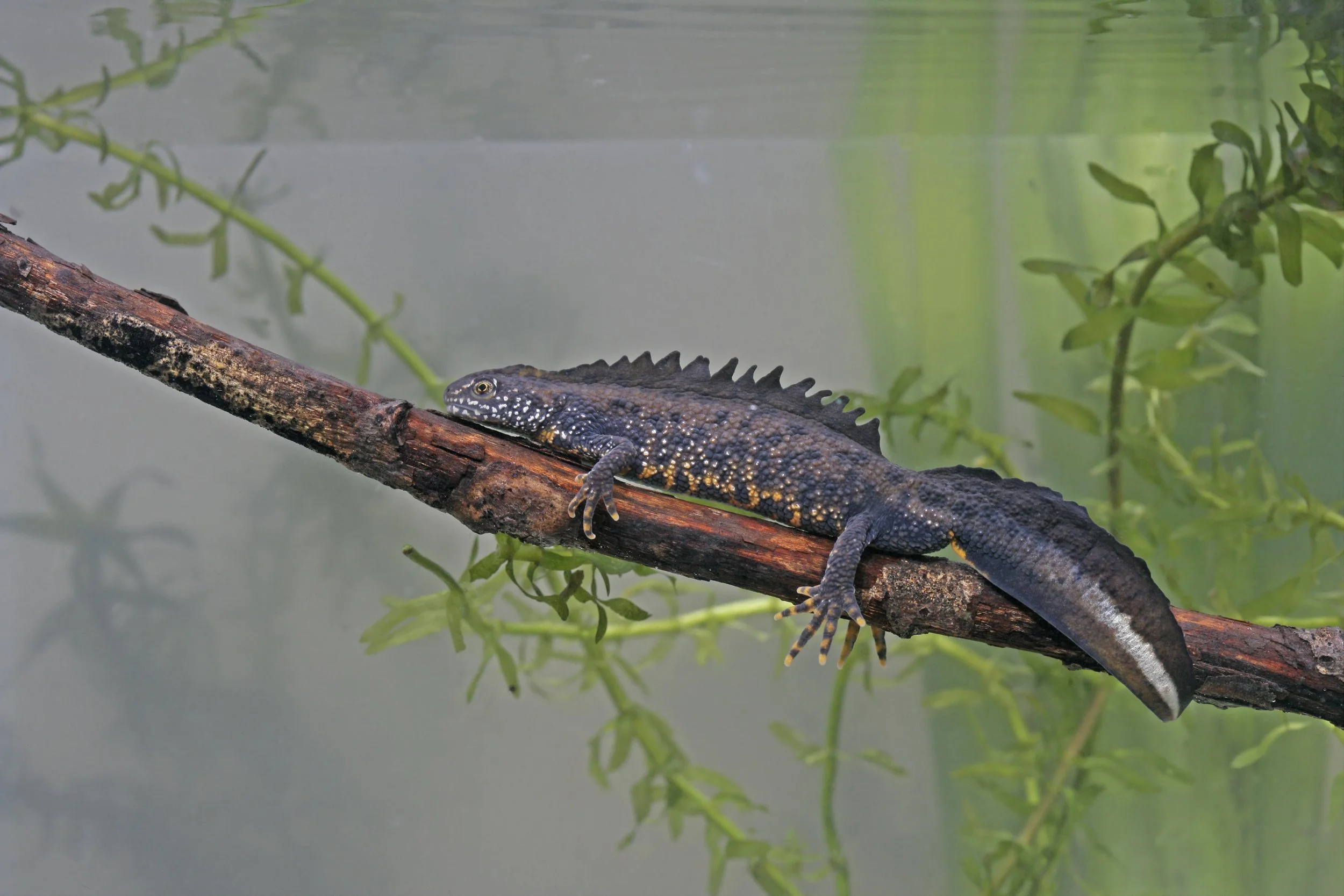
Great Crested Newts are back in Brill!
Guess what? Our surveys revealed numerous Great Crested Newt eggs in both ponds, indicating successful breeding activity this season!
Ponds are one of the UK’s most valuable yet often overlooked habitats. Despite their small size, they provide vital breeding, feeding and shelter for a wide range of wildlife - from amphibians and insects to birds and mammals. They also act as important stepping stones across the landscape, helping species move, survive and adapt in a changing climate.
I knew from chatting with residents that Great Crested Newts have been reported in previous years but we need to know what’s happening right now - so I was delighted when Jen Curtis, a project officer for the Newt Conservation Partnership, and Emily Coulam, RBOR* Nature & Greenspaces Officer at BBOWT, came to Brill to survey our ponds.
A protected species
Great Crested Newts are a fully protected species - meaning their eggs receive the same legal protection as the creatures themselves. Disturbing eggs - or the vegetation to which they are attached - without the appropriate licence is an offence. This is why surveys that involve searching for eggs on aquatic plants must be carried out by licensed ecologists - and why Jen waded in to help!
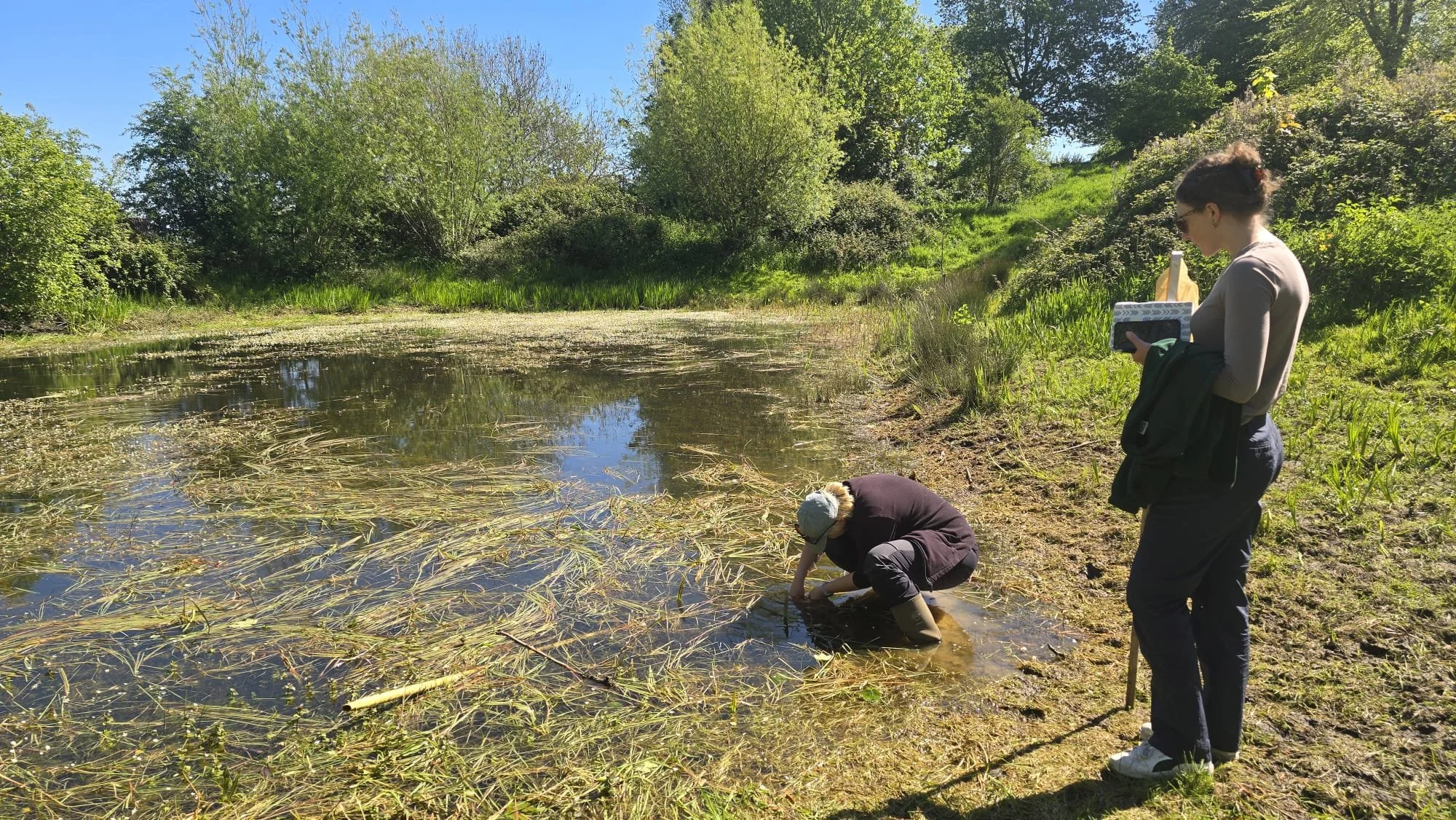
Jen and Emily surveying the pond in The Walks in late April (photo F B-M).
One of the most fascinating behaviours of Great Crested Newts is how females lay and protect their eggs. Eggs are laid on submerged plant leaves in Spring and early Summer, one egg to a leaf. The newt then uses her hind legs to carefully fold the leaf around the egg. This helps shield the egg from predators, sunlight and damage, and is a key sign used by licensed surveyors to confirm breeding activity.
Success!
And guess what? Our surveys revealed numerous Great Crested Newt eggs in both ponds, indicating successful breeding activity this season!
The Walks pond is particularly rich in vegetation, with floating sweet grass, water mint and thread-leaved water-crowfoot. These plants are vital, providing egg-laying surfaces as well as shelter for newts and other pond life. The pond was also teeming with aquatic invertebrates; an important food source for newts, which are carnivorous both in and out of the water.
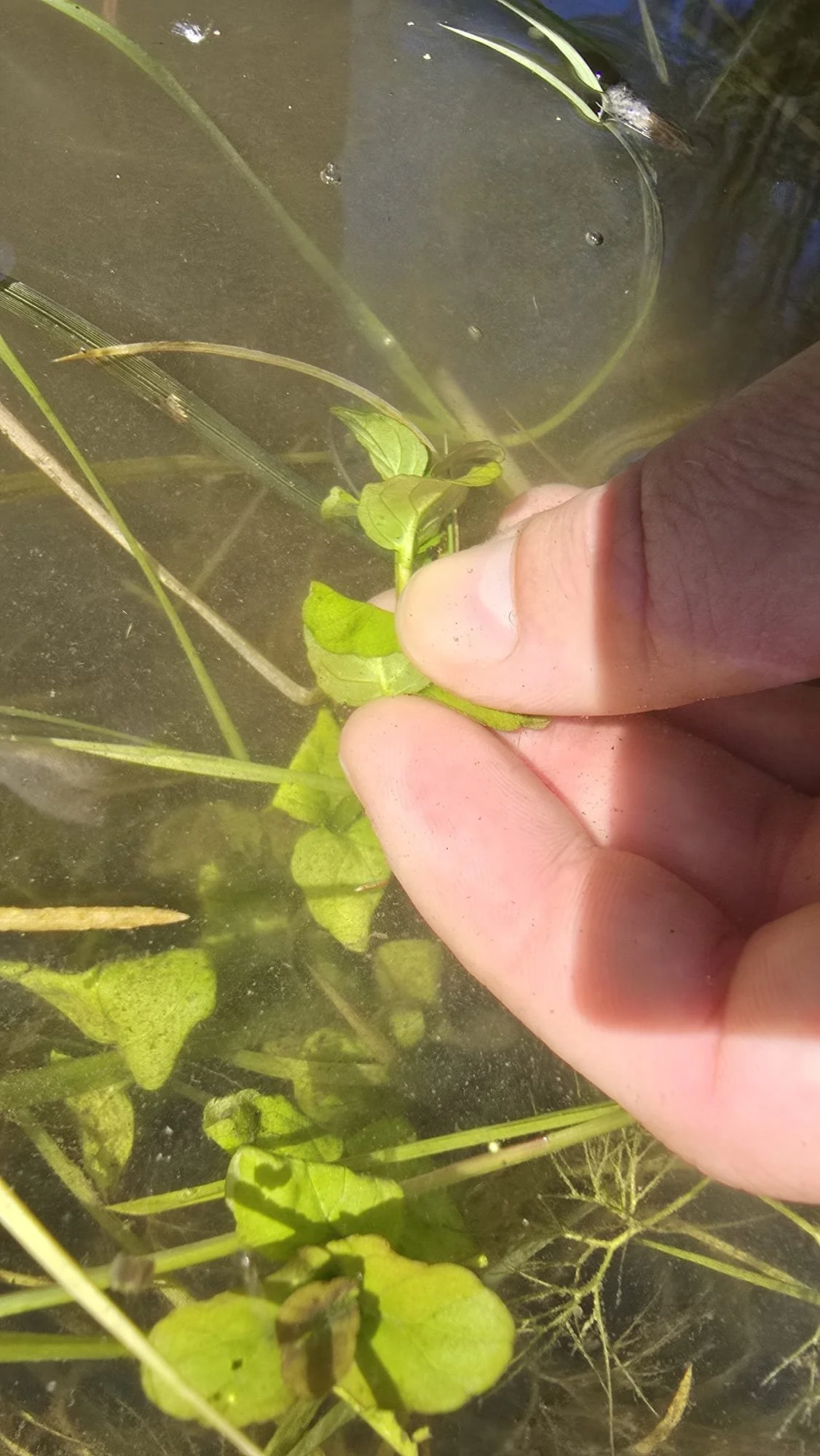
Newt eggs folded in the leaves of water mint in The Walks pond (photo F B-M).
The important bit
This is a crucial time in newt egg development, with newts facing a 50% mortality rate at this stage in their lifecycle. Giving them space can make a real difference so it’s critical the ponds remain undisturbed. THIS MEANS KEEPING DOGS OUT OF THE WATER.
I understand the challenge (I’m a dog owner myself) but if we can protect the ponds until September, when the newts leave the water and return to a largely terrestrial life, we’ll have done something genuinely helpful to support this important species.
*RBOR stands for Reconnecting Bernwood, Otmoor & the Ray, a partnership project supporting nature recovery and community access across a nationally important landscape in Buckinghamshire and Oxfordshire. I’m working with RBOR to develop projects in the area, including in Brill.
Did you know?
Hugh Warwick’s talk was the absolute highlight of my week and reminded me of what beauty there is right in front of our noses.
by Matilda Tuffley, Brill resident
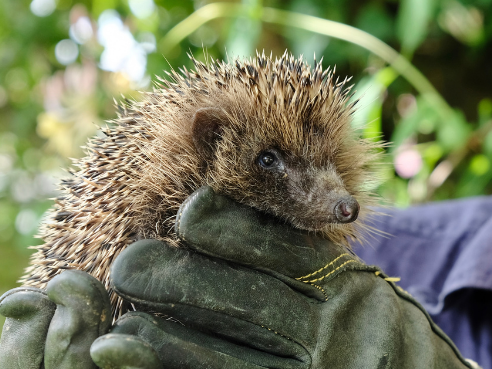
Did you know that hedgehogs are rather promiscuous? That they curl in a ball by frowning? That they are actually lactose intolerant? If it wasn’t for the wildlife talk I attended by Hugh Warwick last month, I wouldn’t know either - and I wouldn’t be endlessly repeating these facts to nearly everyone I meet.
Hugh was hilarious and so engaging. His passion for hedgehogs really shone through. He stressed the importance of making sure our gardens aren’t too neat - and enabling ‘hedgehog highways’ by making holes in our garden fences for them to travel through. I came away with so much more insight and knowledge.
This talk was the absolute highlight of my week and reminded me of what beauty there is right in front of our noses. I came away inspired and absolutely determined to protect not just hedgehogs but all the wonderful species Brill has to offer. Huge thanks to Fiona for organising this event!
PS Did you know baby hedgehogs are called hoglets?!
Why should we care about Nature?
Go for a walk, identify a flower, or share a picnic outdoors. The possibilities are endless - because nature offers something to everyone, wherever you are and whatever space you have.
In March, my husband and I attended a talk during Oxford Literary Festival that left a lasting impression on us both. We listened to Chris Packham, Michael Morpurgo, Isabella Tree and Philip Lymbery discuss why nature matters and what each of us can do to protect it. We came away inspired, better informed - and with a sense of responsibility to share those messages as widely as possible.
Take action
At the close of the discussion, Philip Lymbery asked the panel one final question: what single piece of advice would they give the audience?
Chris Packham shared a story about a conversation he had with Sir David Attenborough at the close of the COP26 summit. He asked Sir David how he felt his speech had gone. Sir David replied, “I think they listened and took it in but I fear tomorrow they will all have forgotten it.” Chris Packham’s message was both simple and urgent: don’t let the ideas shared in the talk just fade away. Take one action for nature - whatever you can manage - and inspire others to do the same.
Isabella Tree echoed that call with powerful clarity: just do something. Plant a seed. Pick up a piece of litter. Listen to birdsong. Meaningful change does not begin with grand gestures; it begins with small, deliberate acts repeated by ordinary people. You do not need to lead a celebrated rewilding project like Isabella Tree to make a real difference.
Sir Micheal Morpurgo highlighted the vital role of education and the need to connect children with the natural world. Every child should have the chance to experience nature firsthand, to understand where food comes from and to recognise the consequences of human choices and actions. If we want a healthier planet and a more responsible future, we must nurture curiosity, awareness and respect for the world around us from the very beginning.
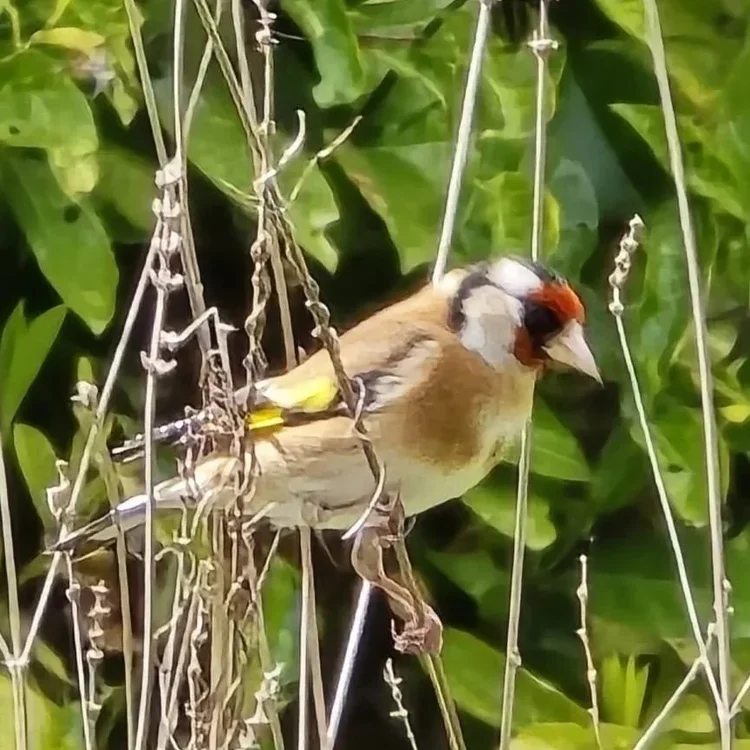
The Goldfinch in my garden. Find out more about this bird and its call on the RSPB website (website opens in new tab)..
Movement & music
If these words can encourage just one person to step outside, then they will have served their purpose. The countryside is alive with movement and music; buzzing insects, fluttering wings and birdsong rising from every corner. As I sit writing this at home, a Goldfinch is gathering old lavender stems and carrying them to its nest. Yesterday, I picked herbs from containers I planted a few years ago using repurposed old boxes. These may seem like small moments, but they are reminders that nature is always there, waiting for us to notice it.
So, go for a walk, identify a flower, or share a picnic outdoors. The possibilities are endless - because nature offers something to everyone, wherever you are and whatever space you have. Imagine how much brighter and more hopeful our planet could be if each of us did one thing today for nature. Pass it forward!
A Day in the Life of Brill’s Wildlife and Community Ranger
There’s a lovely seasonal rhythm to conservation work - and Autumn and Winter is the time for hands-on habitat management.
There’s a lovely seasonal rhythm to conservation work - and Autumn and Winter is the time for hands-on habitat management.
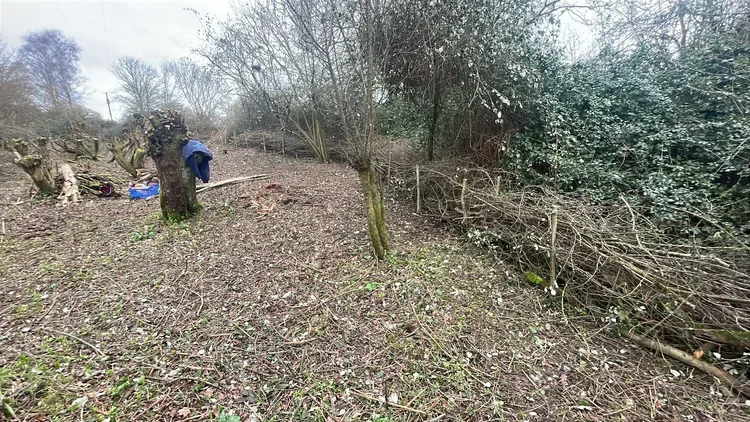
Much of my time in recent months has been spent working alongside volunteers cutting back scrub - usually dense patches of hawthorn and blackthorn. Doing this helps keep areas of grassland open, allowing a wider variety of plants and wildlife to thrive. We’ve also removed selected trees to open up shaded corners or make safe those that lean a little too close to paths.
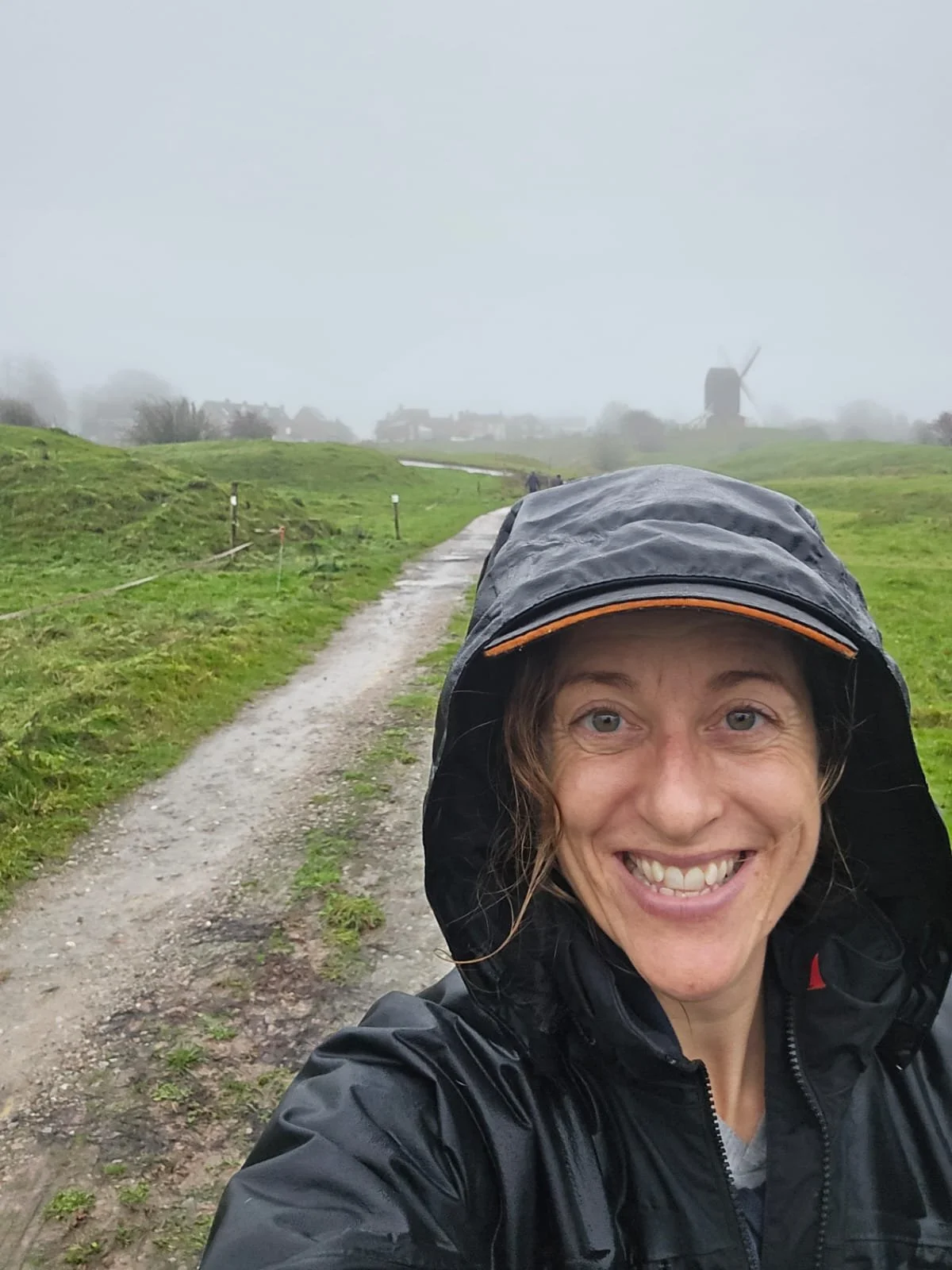
Out in all weathers! Fiona in February rain.
When the cutting is done, the branches and brash find new purpose. Some are burnt, whilst others are woven into ‘dead hedges’; quiet shelters where insects, birds and small mammals can find refuge. We’ve opened up an old woodland glade at the bottom of Tram Hill (on the right, between the road and fields) and one of the volunteers, James - who’s also a parish councillor - created a fantastic dead hedge with the cut material. It’s well worth a look if you’re passing by.
Another on-going task is the clearing of an overgrown boundary fence line. A job that began with removing trees and dense scrub will soon lead to a new post-and-wire fence. Work like this is never done alone and I’m especially grateful to volunteer Tim, who has generously given many hours of his time to help move this project along.
Making connections
In the midst of all this I’ve been meeting with various organisations including BBOWT (Berkshire, Buckinghamshire and Oxfordshire Wildlife Trust) who manage a project nearby. Building partnerships enables future collaboration and could help secure funding for conservation work.
I also have a new role of chief fire-lighter with Brill’s Forest School! Helping children toast cheese sandwiches and popcorn over an open fire never loses its charm and is a gentle reminder that Brill Common is not just a place to manage for wildlife but somewhere people of all ages can come to discover nature for themselves.
Looking ahead
As we move into bird nesting season, my focus will shift. Heavier habitat work will be paused so wildlife can breed undisturbed and I’ll turn my attention to surveys, wildlife recording, and helping people explore Brill Common and learning about the wildlife that call it home.
My programme of events and activities is starting to come together. Many of these will be supported and, in some cases, led by other people. Topics in the pipeline include hedgehogs, swifts, house martins and swallows, and wildlife-friendly gardening and ponds. I’m also hoping to organise guided wildlife walks - plus some introductory sessions on habitat surveys. Watch this space!
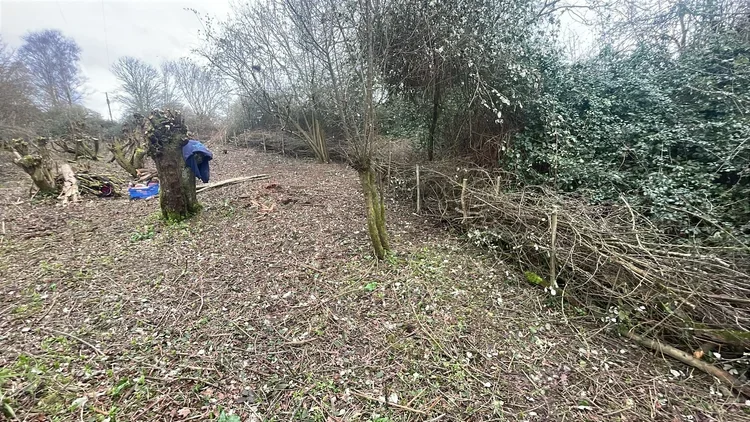
Cleared ground to encourage a variety of plants to grow, and a ‘dead hedge’ of branches and brash to shelter wildlife.
It’s YOUR common - so get involved!
If you have knowledge you’d like to share - maybe by giving a talk or leading a walk - please get in touch. Similarly, if you have a suggestion for a community project involving the common, I’d love to hear from you!
If you haven’t already done so, take 2 minutes to complete my short survey to tell me what events and activities you’d be interested in.
If the sun is shining and you’re got an hour to spare, have a look at my family nature activity sheet. There’s something there for all ages; print it off or follow along on your phone.
Keep an eye on the Protect Brill Common Forever! Facebook page. I’ll be announcing new events there and on the website and on the community notice boards.
Where hope takes root. From snowdrops to shelter-building
February settles in, wrapped in grey skies and steady rain, yet something hopeful is stirring beneath the surface.
February settles in, wrapped in grey skies and steady rain, yet something hopeful is stirring beneath the surface. The first flowers of the year begin to push through. Snowdrops nod in the cool morning air and crocuses and early daffodils reassure us that spring is drawing closer.
Hope springs eternal - and perhaps nowhere is this more evident than in children discovering the natural world. Their muddy boots and open curiosity carry the same quiet promise as those first snowdrops. Give a child a patch of earth, a fallen branch or a glimpse of something stirring beneath the leaves, and they will find wonder.
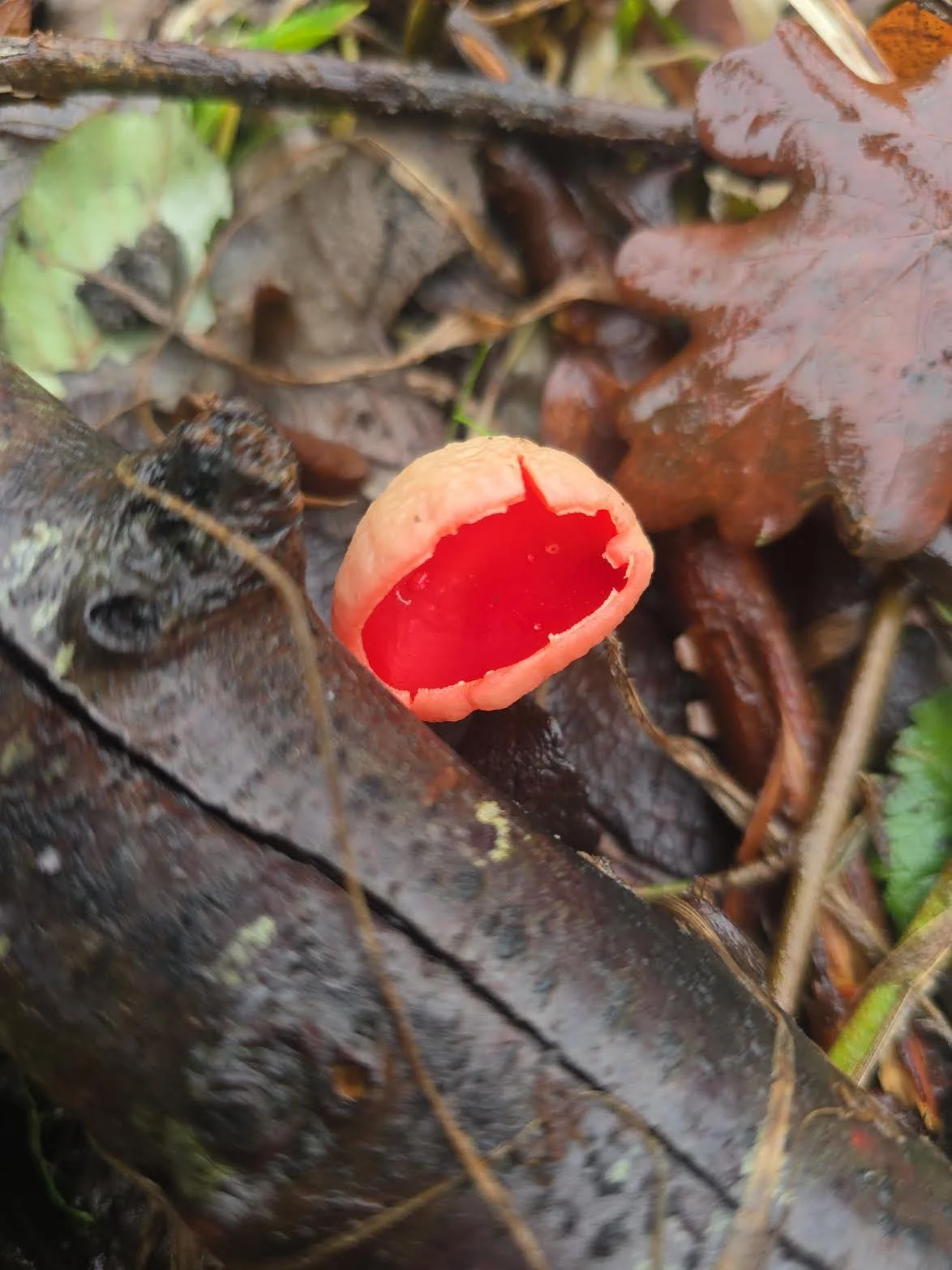
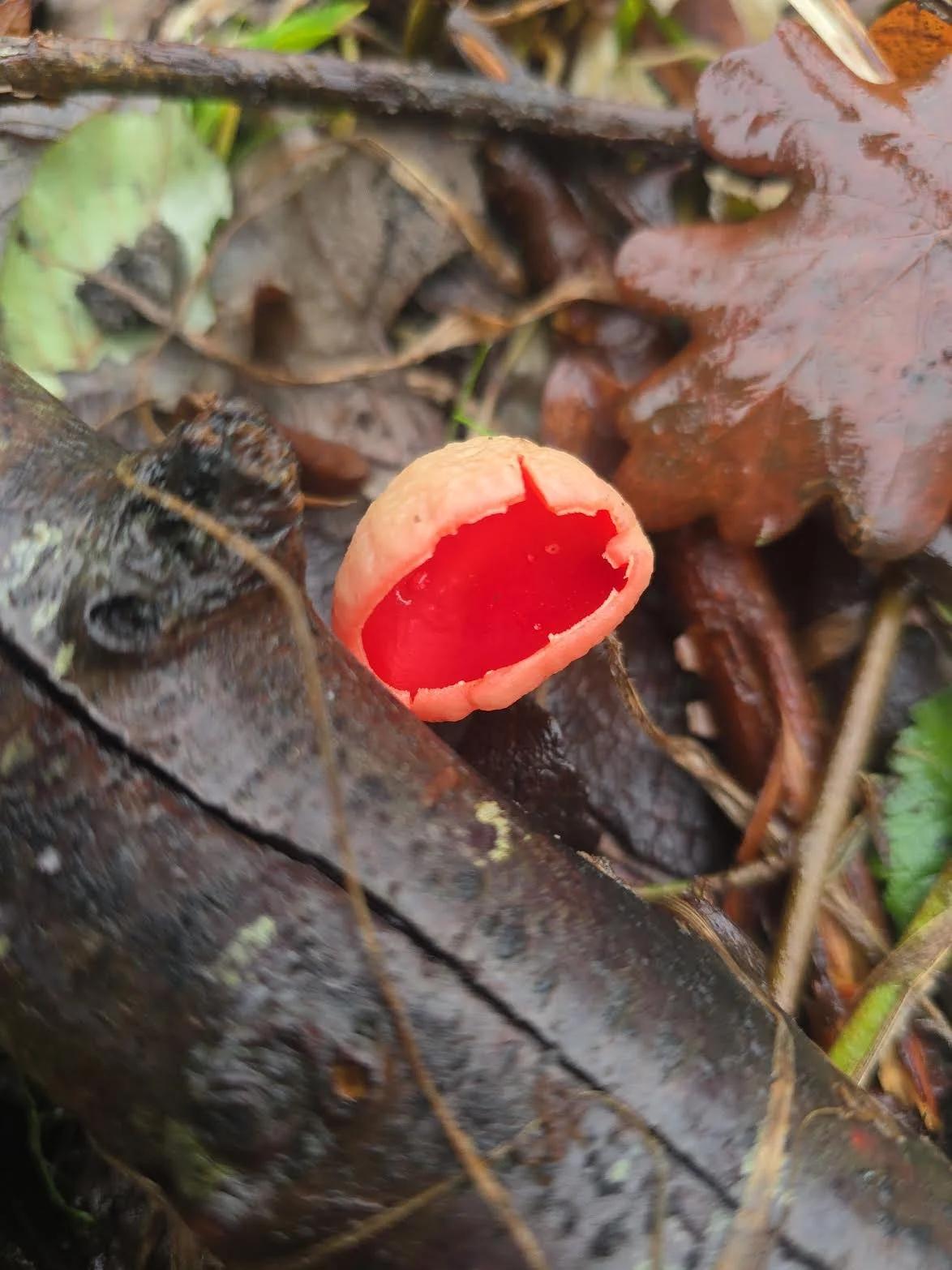
Wonderfully named Scarlet Elf Cap seen on Brill Common.
As a child, I was endlessly fascinated by the natural world. You were far more likely to find me knee-deep in mud hunting for worms or constructing dens, than inside four walls. Forest School wasn’t available when I was young but Brill School offers sessions throughout the year, some at the Hollow on the edge of Brill Common, where I joined a Key Stage 2 class this month.
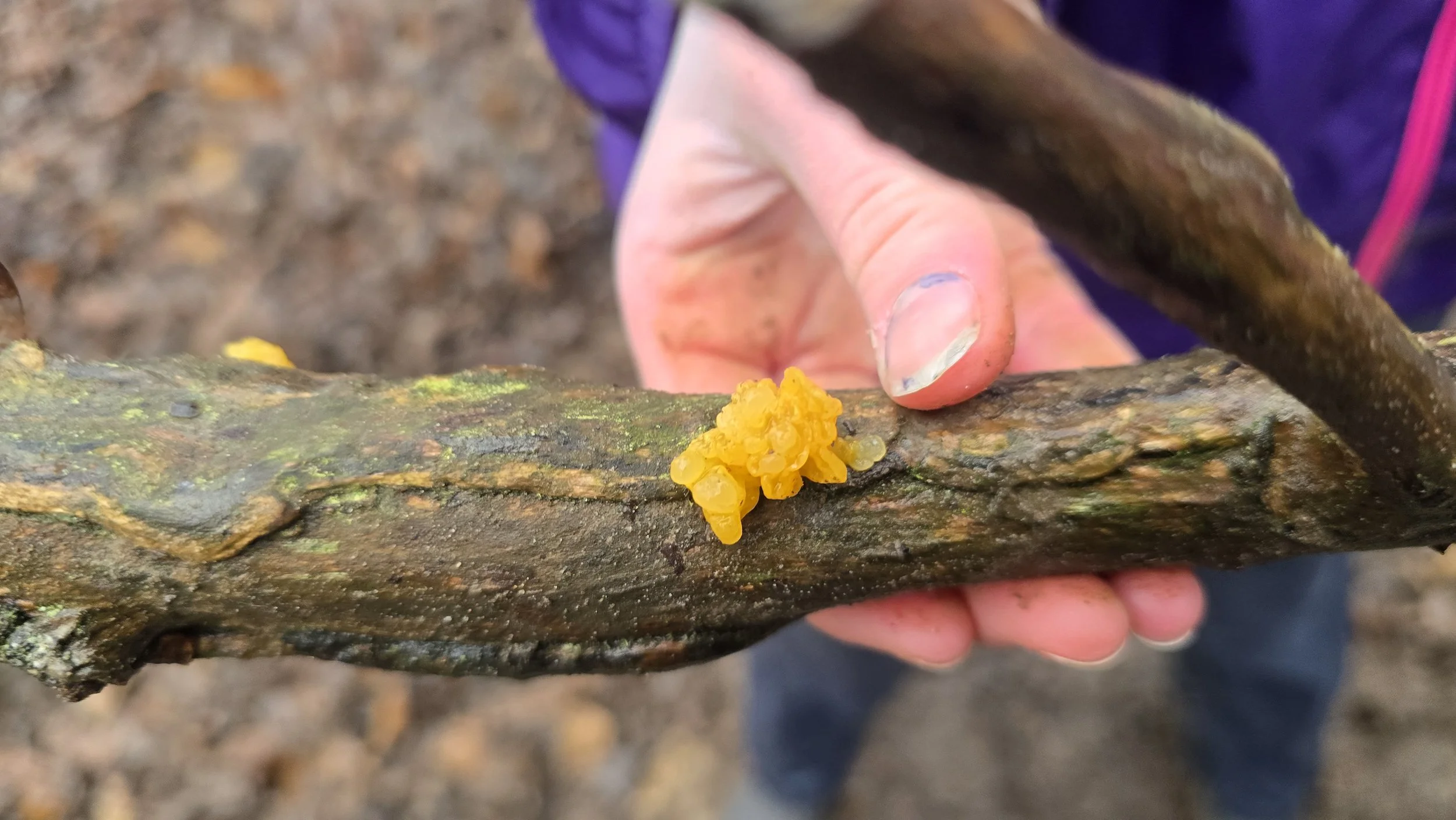
Yellow Brain Fungus held by one of the Forest School children.
Led by the Two Hannahs*, the children focused on whittling wood, exploring - and the simple joys of sliding through mud and hauling themselves up slopes with ropes. They built shelters by weaving willow around hazel stakes and constructed ration lines - with varying degrees of success!
I showed them different types of fungi, encouraging them to look closely at the shapes, textures and colours often missed at first glance. We paused to listen to the woodland, tuning into birdsong and trying to identify the calls. Stories were shared about birds visiting garden feeders and animals spotted locally, each account weaving the group’s experiences into the wider landscape.
Whether working together as a team or scaling a slope independently for the first time, the joy and sense of achievement were clear to see. It’s a testament to the Two Hannahs, who support the children so thoughtfully. They bring enthusiasm and encouragement while stepping back just enough to allow space for mistakes so resilience can grow and real learning can take root.
Connecting children with the natural world is so important because they are the future custodians of these places. In their curiosity and care lie hope, much like the first flowers of Spring and their promise of brighter days ahead.
*Hannah Tuffley and Hannah Chisholm
PS Do let me know what events and activities you’d like to see happening on Brill Common! If you haven’t already done so, please complete my two-minutes survey.
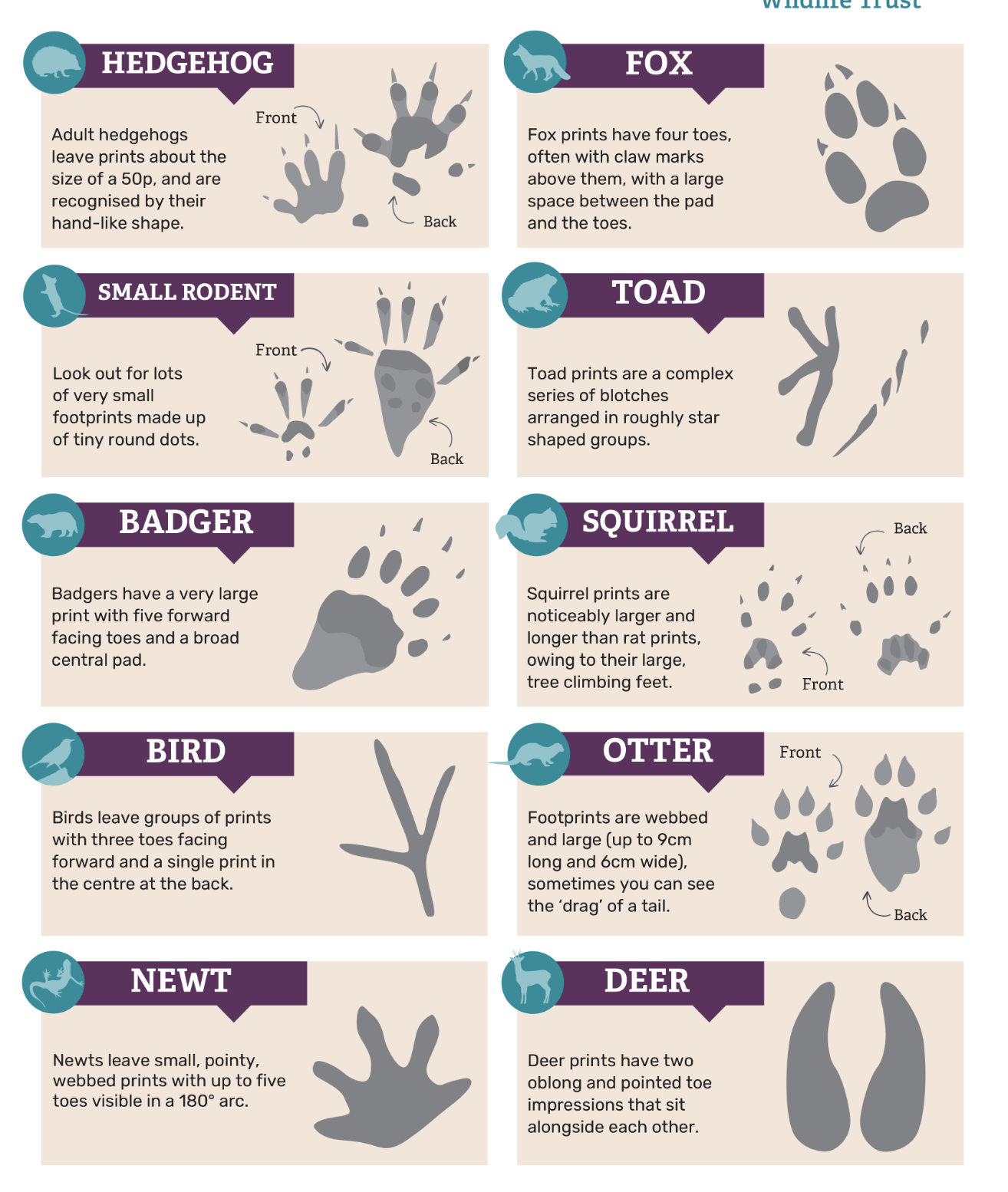
Family fun on Brill Common
Fiona has prepared a family activity sheet to get families out enjoying the common this half-term.
Fiona has prepared a lovely family activity sheet to get us out enjoying the common. Activities are divided into four age groups - including Grown-Ups - and they’re all inspiring, fun, and really do-able.
Here’s how to access the activity sheet:
Download a copy of the activity sheet (pdf opens in new tab) and print it at home or in a library
The activity sheet was originally intended for the February 2026 half-term - but it’s relevant all year round.
Survey on events and activities
Please complete Fiona’s short survey to let her know what events and activities you and your family would be interested in.
Fiona is looking forward to getting people out and about on the Common, learning about wildlife, sharing stories, doing simple conservation tasks - and having fun! Please complete her short survey to let her know what events and activities you and your family would be interested in. There may well be coffee and cake afterwards…
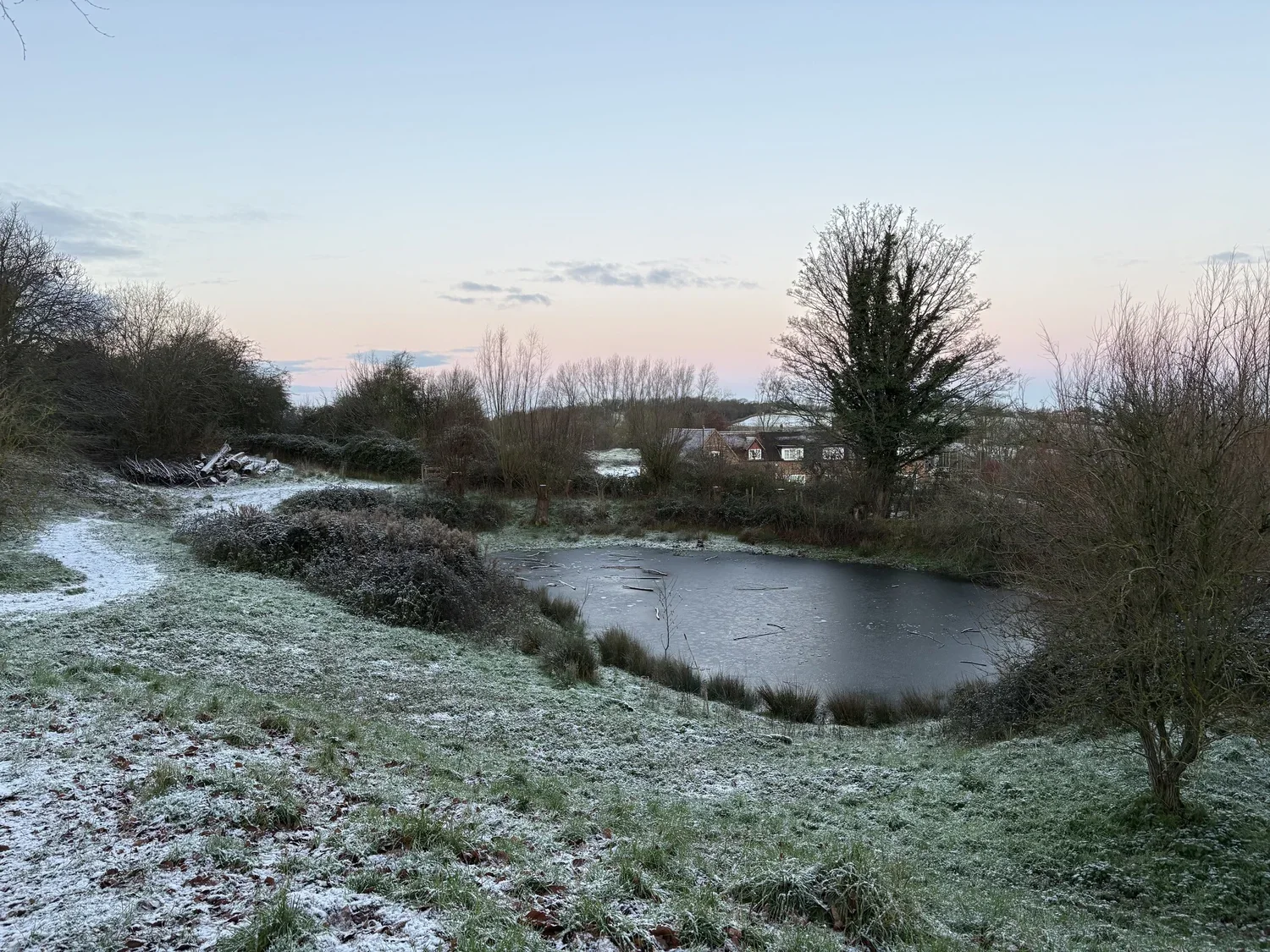
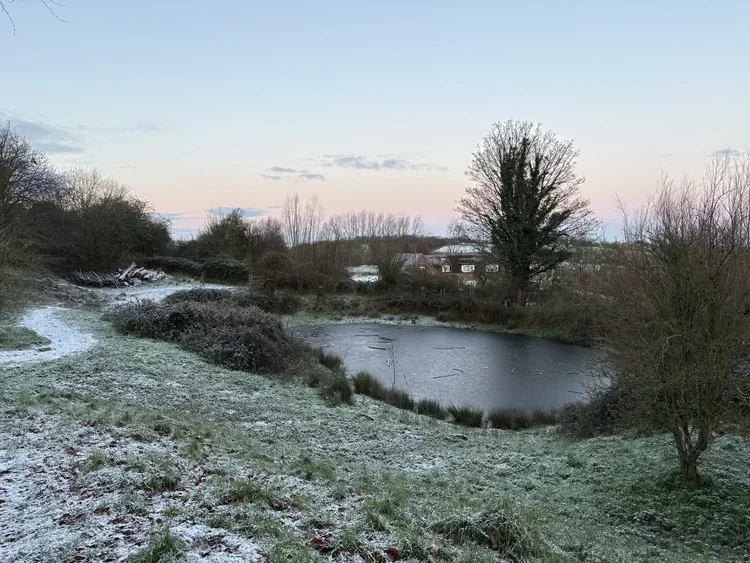
There are several ponds on Brill Common and a large one in The Walks, an enclosed area managed alongside the common. This photo shows the pond on The Walks in mid-December 2025.
The stillness of January
January brings a natural pause, reminding me to slow down and notice winter’s understated resilience and the promise it holds.
January brings a natural pause, reminding me to slow down and notice winter’s understated resilience and the promise it holds. I’ve always had a fondness for this month - and not just because I celebrate my birthday (and, hopefully, a husband-funded dinner out!) - but also because the recent clear blue skies, hard frosts, and even snow make it the perfect time to observe wildlife and reconnect with the landscape.
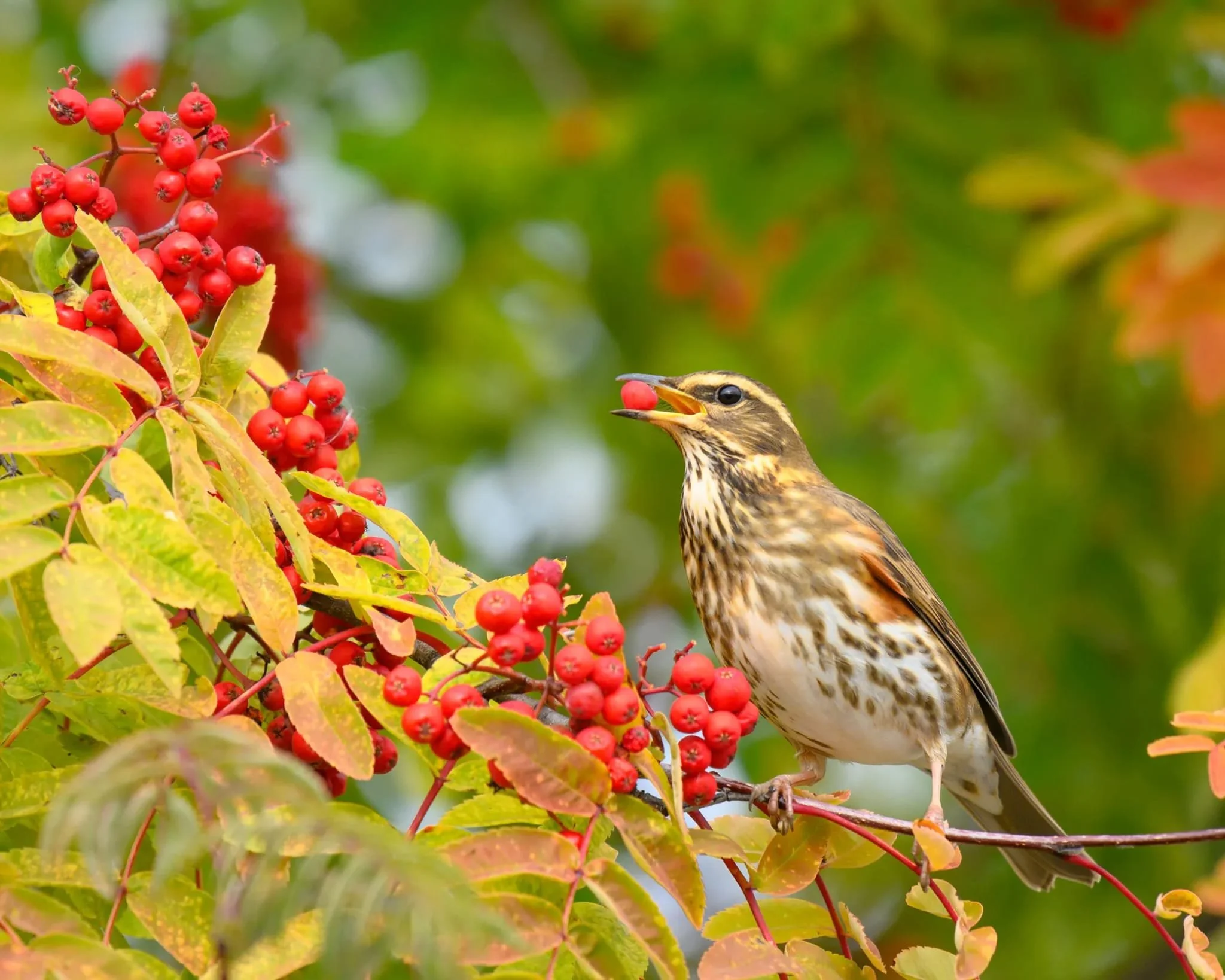
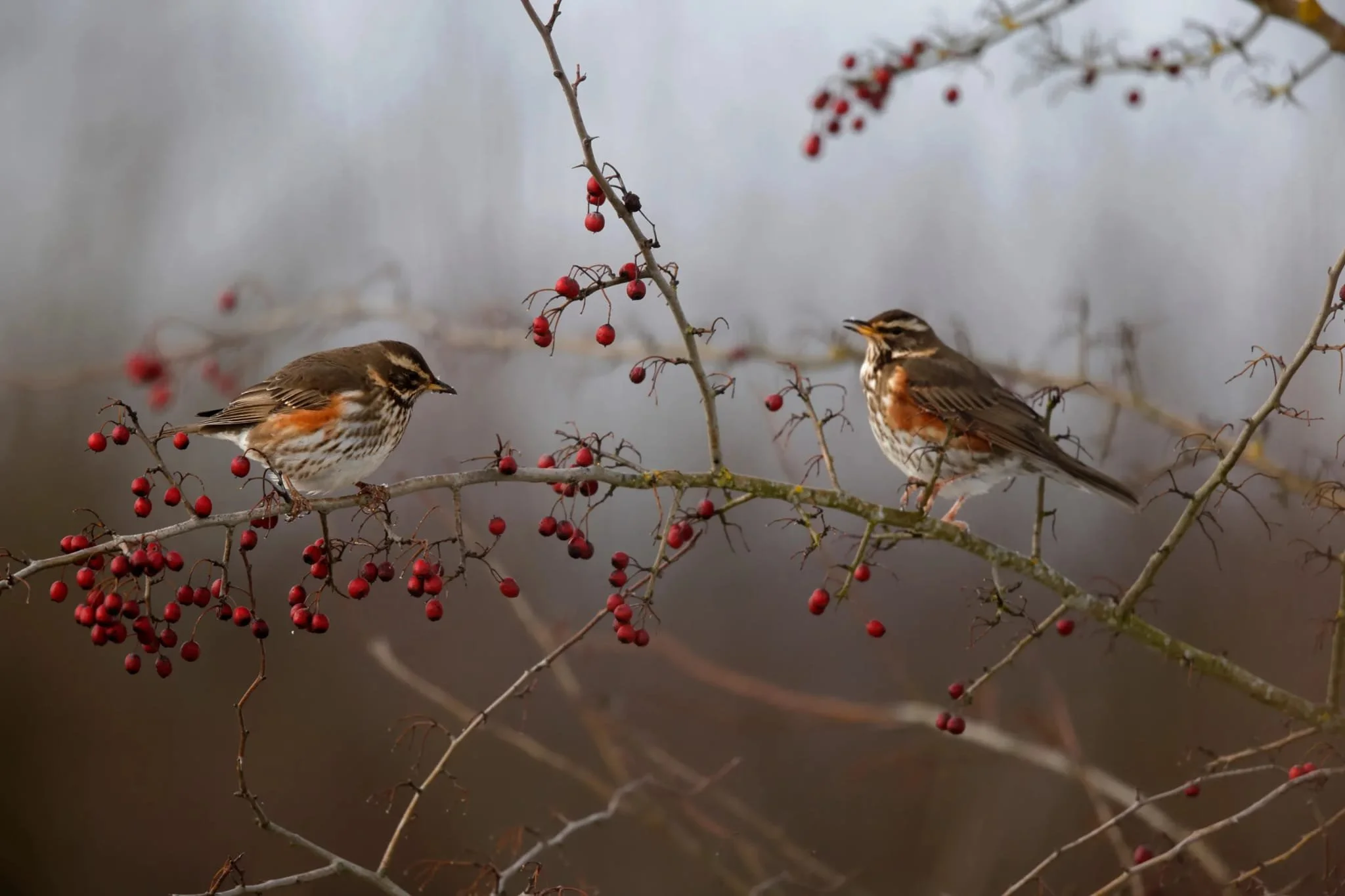
Redwing; a Scandinavian visitor enjoying our wild fruit and berries. All the bird pictures in this month’s newsletter are from the brilliant RSPB website.
After time off over the festive period, my first week back at work has been up-lifting. By allowing space for stillness - listening carefully and observing closely - I’ve recognised bird calls I hadn’t heard in a long time, reminding me of the importance of patience in conservation work. Not everything is immediately visible. In conservation progress is often measured through careful observation over time, with results emerging gradually as consistent management takes effect.
So which species have piqued my interest this month?
I was first drawn to some high pitched reedy “tseep” calls from the treetops bordering the common. Using my trusty binos, I confirmed these to be flocks of Redwings (Turdus iliacus) the smallest of our thrushes and regular Winter visitors from Iceland and Scandinavia, here to feed on our fruit-laden trees and shrubs. Although Redwings are a gregarious species they’re very skittish and the flock will fly off as one when disturbed.
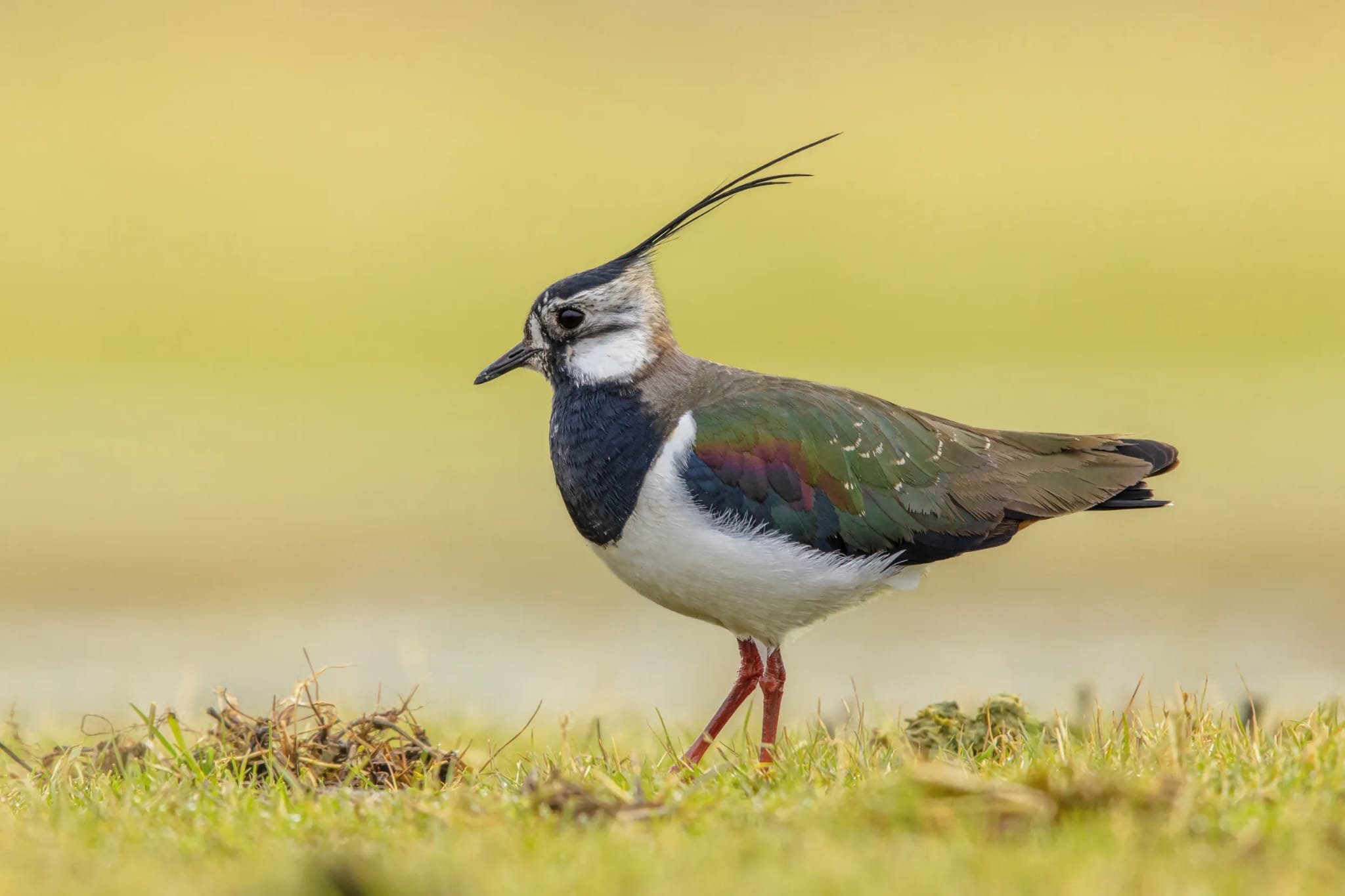
Lapwings are native to the UK and feed mainly on earthworms, leatherjackets, and insects and their larvae.
It was then I recognised another call; a distinctive “tow-ip” carrying across the adjacent fields. I peered over a gate and was thrilled to see a flock of around ten Lapwings (Vanellus vanellus). The Lapwing is a Plover species, instantly recognisable by its striking black crest and bold black-and-white underwings, clearly seen during their characteristic buoyant, tumbling flight. Lapwings breed and over-winter on arable fields and salt marshes. Although native to the UK, their numbers have declined significantly in recent decades.
What a New Year’s treat!
January reminds us that not all progress is visible or immediate. In the quieter months, when the land appears dormant, stillness becomes an essential tool - allowing us to listen, observe, and appreciate. It is in these moments of attention that connections are renewed, knowledge deepens, and hope quietly takes hold. This is the rhythm of conservation work, and one of the many reasons I love this work.
Wishing you all a very Happy New Year, with time to notice nature, appreciate its resilience and renewal, and remain present in the landscapes around us.
Survey on Brill Common activities and events
I’d love to share Redwings, Lapwings and all the other wildlife on Brill Common with you - but how best to do this? I’ve got lots of ideas but I need to hear from you! Please take two minutes to complete my survey on this website and we’re start planning.
Common sense. Why conservation needs its community
Conservation may be all about wildlife and habitats - but it’s people that make things happen.
Conservation may be all about wildlife and habitats - but it’s people that make things happen.
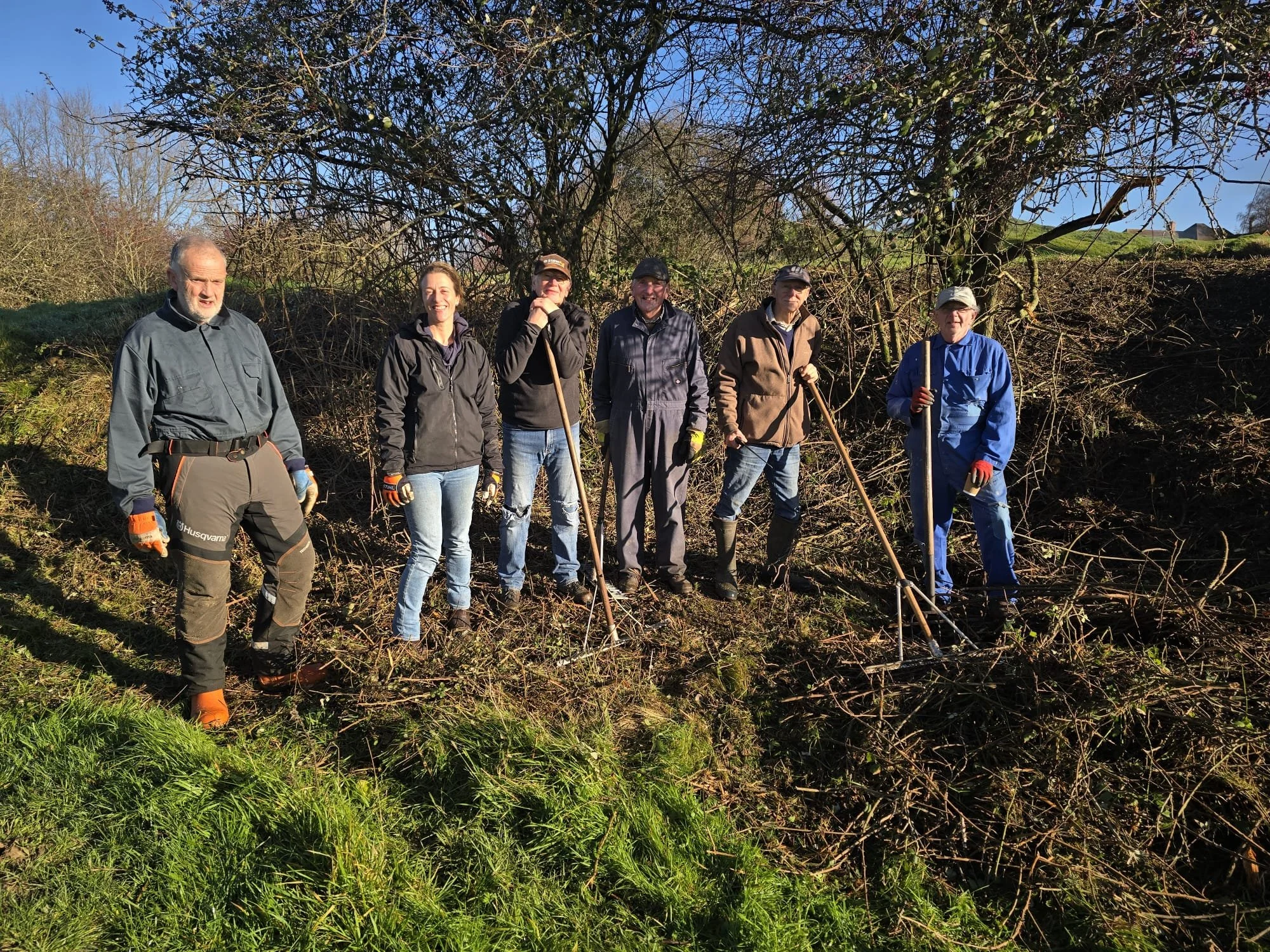
Volunteers have been the backbone of all of my conservation work - and it’s equally true here, on Brill Common. When sheep grazing ended in 1996, two volunteer groups took on the active management of the common alongside the BVCH - Friends of Brill Common (FOBC formed in 2007) and the Common Volunteers (formed in 2003). Remember that many commons are the product of centuries grazing and low-intensity use. If left unmanaged, scrub and woodland take over, shading out wildflowers, reducing open habitats, and changing the ecosystem entirely.
One of my primary roles as Ranger is to “maintain, protect and enhance Brill Common for the benefit of wildlife and people” - and supporting the volunteers in their work is a crucial means of achieving this outcome. I’ve already had the pleasure of meeting and working alongside with both the FOBC (pictured left) and the Common Volunteers and, over the coming months, I’ll write more about both giving them the airtime and word count they deserve. For the time being, here’s a brief insight into how conservation works in practice and the skills and knowledge that have helped make Brill Common what it is today.
The management of any wildlife site begins with a habitat survey; a record of plant species, noting key indicator species, invasive species, and any plants of conservation concern. This information helps us assess the condition of the habitat and determine its management needs - in short; what we need to encourage - and what we need to minimise. Since 2008, the condition of Brill Common has been documented in a series of surveys and reports and the resulting work schedules have guided on-going management by all the volunteer groups.
Keeping volunteers and residents informed is a key part of my work - and something I believe to be vitally important. Here’s one small example. Last month, a BBOWT surveyor noted Brown Hairstreak Butterfly eggs on the common; fantastic news and a clear sign that our habitat management is working. The Brown Hairstreak Butterfly is just one of many species benefitting from our volunteers’ dedication and hard work. Pockets of habitat - like Brill Common - link together to form wildlife corridors; essential routes and refuges that support the long-term survival of countless species. Never underestimate the importance of even a small wildlife site - nor the people that make all this possible.
Please get in touch!
Do email me your wildlife questions including photos of things you’ve seen out on the common and would like to know more about. I’m thinking about setting up weekly nature walks. What do you think? Would you or your family be interested?
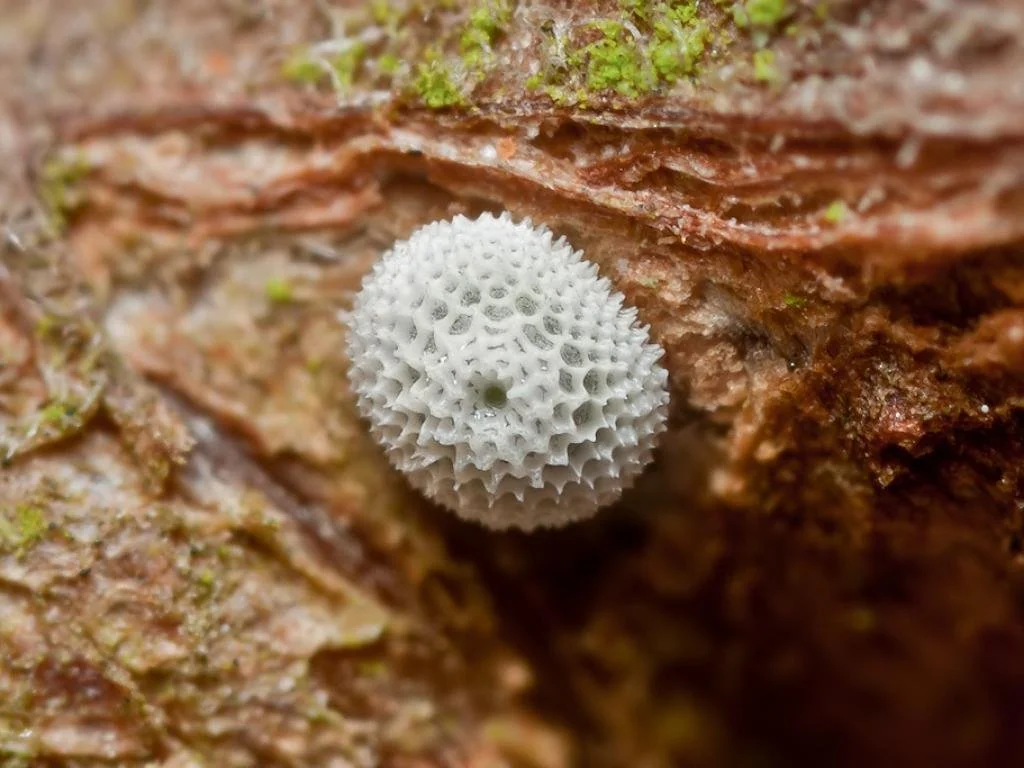
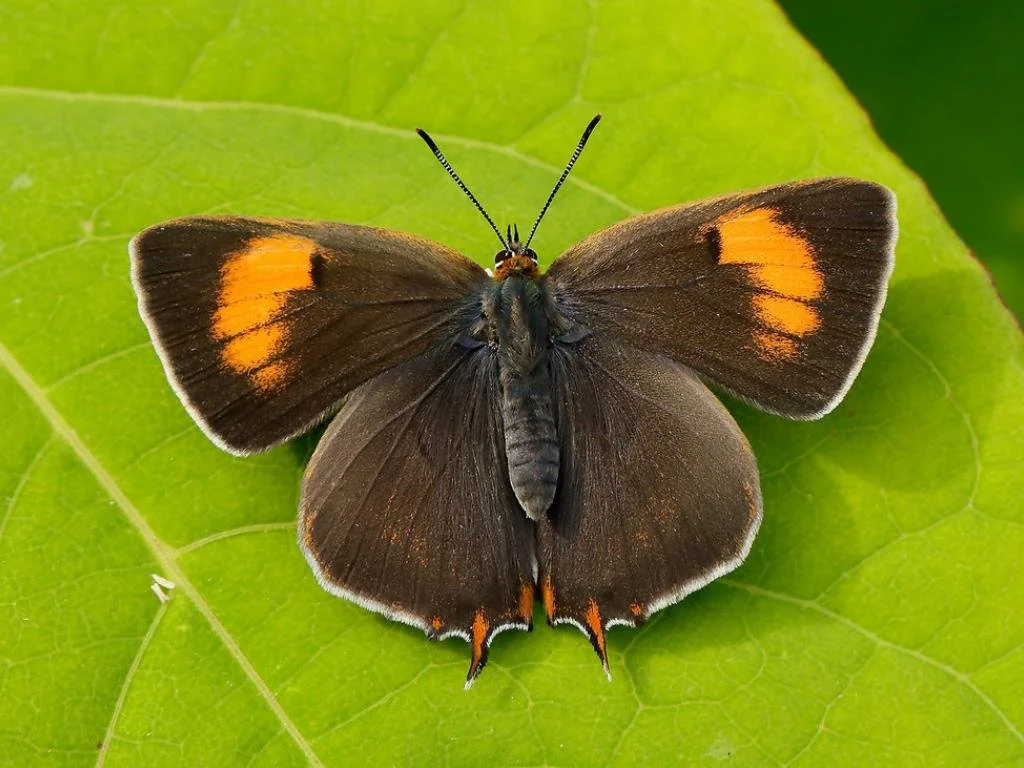
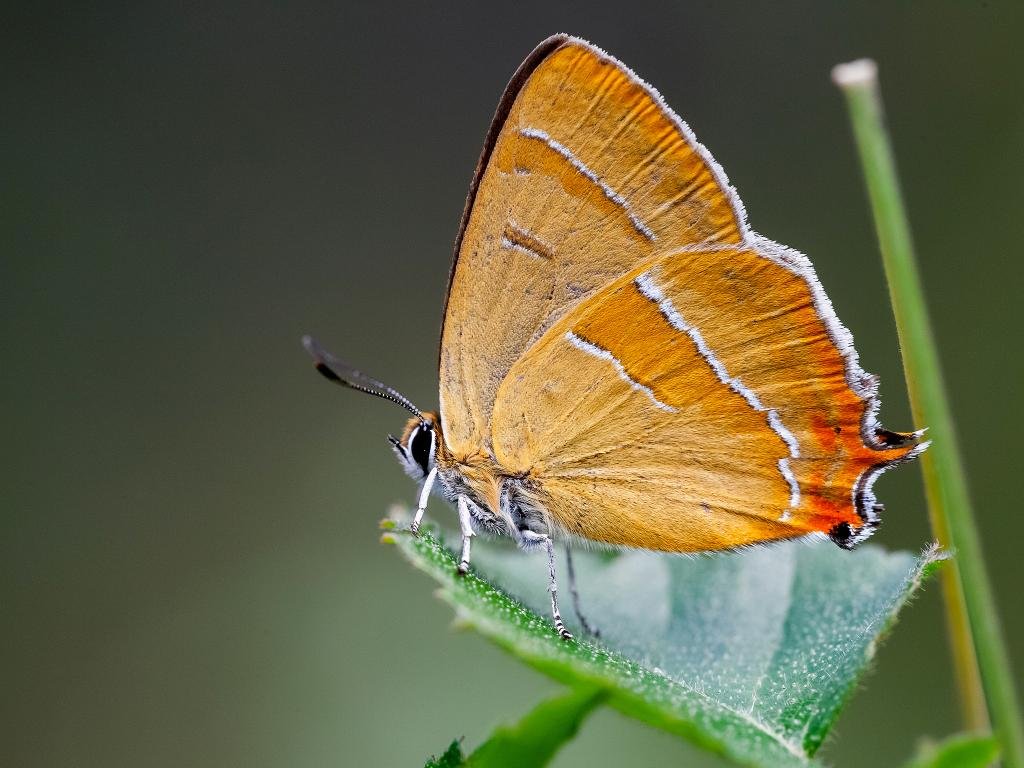
From left to right: Brown Hairstreak Butterfly egg (Gillian Thompson). Brown Hairstreak Butterfly upper wings (Iain Leach). Brown Hairstreak Butterfly under wings (Adam Gro) All photos from Butterfly Conservation website.
A tail of two herds
One of the main reasons I applied for this job was because your common has animal lawnmowers.
One of the main reasons I applied for this job was because your common has animal lawnmowers. As most of you know, Brill Common is unimproved grassland; an incredibly important and increasingly rare habitat that supports a wide range of flora and fauna. Protecting and managing this habitat is crucial and this is where the grazing cows and goats come into their own.
A handful of people in Brill have grazing rights and two people who exercise these rights are Pat and Tim.
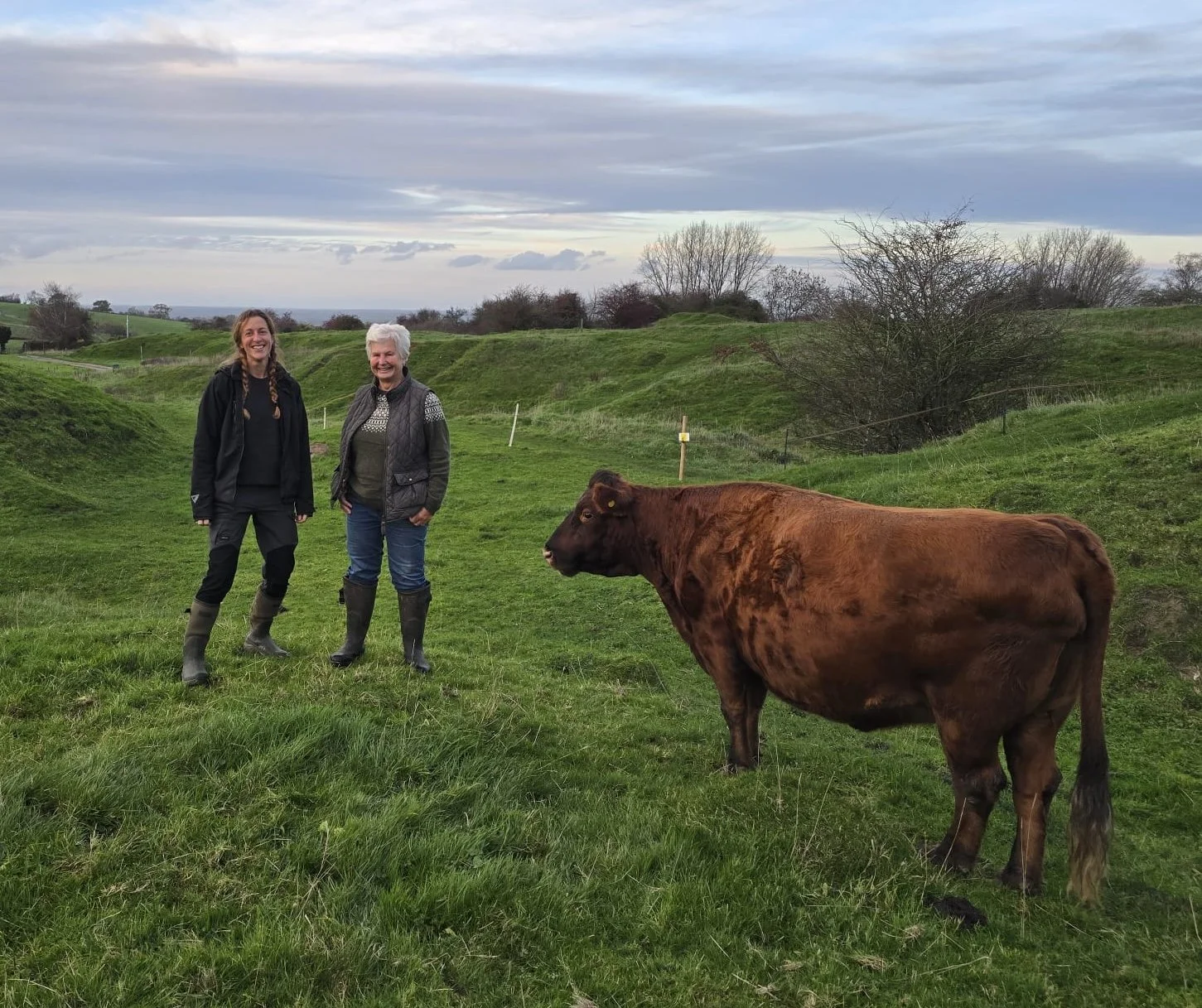
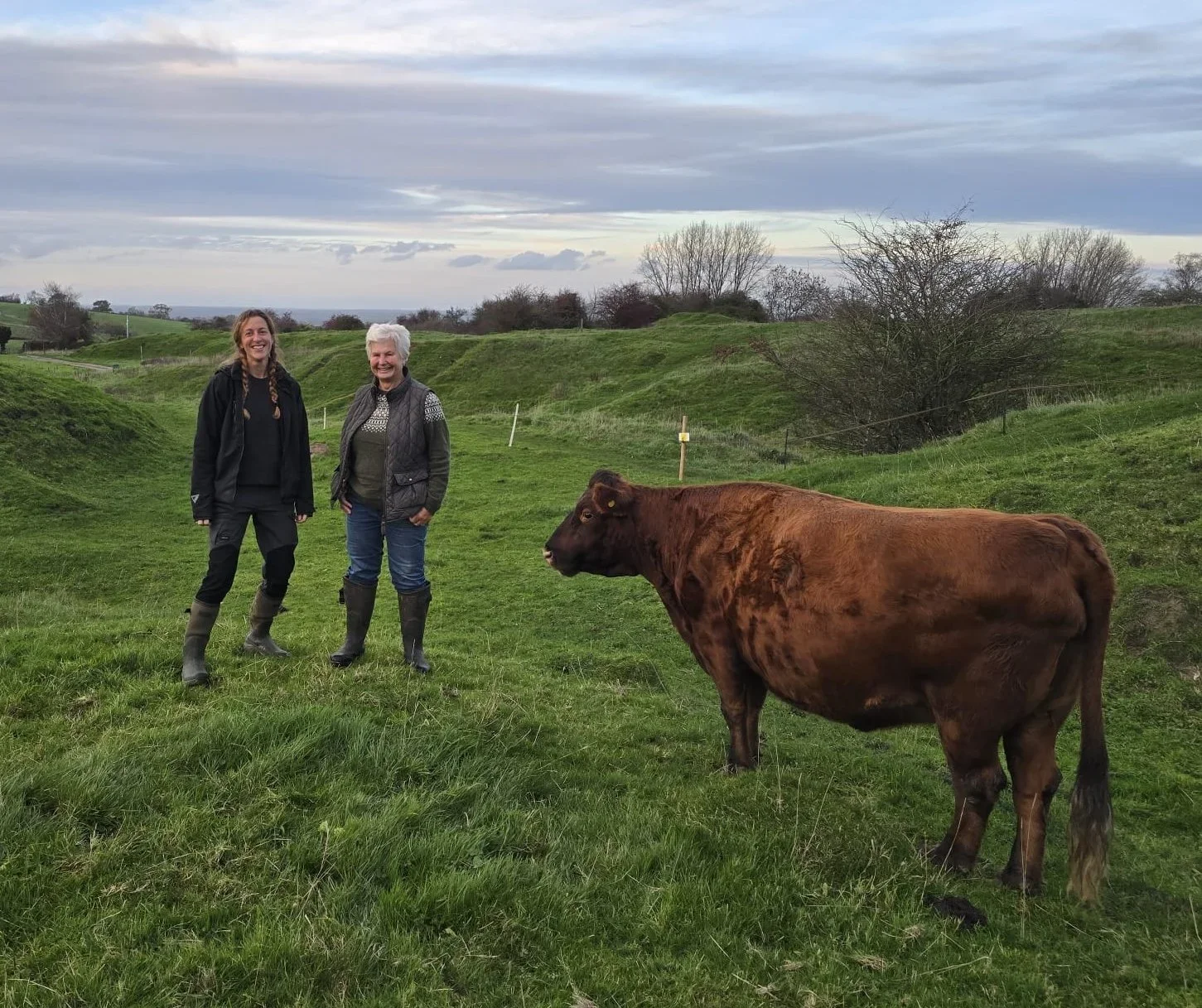
Fiona, Pat Stone, and Squeak - one of the sweet-natured Dexters on Brill Common
Pat is the incredibly knowledgable manager of the herd of seven beautiful Dexter ladies on the common. Dexter is a heritage breed of cattle originating in Ireland. It’s the smallest breed in the British Isles, notable for being both hardy and docile, making them ideal animals for grazing common land. Pat and a dedicated group of volunteers and shareholders form the Brill Village Community Herd. A core of fifty or so volunteers support the herd as Lookers and Movers - which sounds like a great band name! I went along last week to help relocate the cows, and was impressed with how streamlined the Movers’ operation was; much less stress than other livestock operations I’ve been involved with!
Livestock grazing helps keep dominant species of grass and flora in check and so prevents scrub encroachment. Cows use their tongues to pull grass into their mouths meaning they leave tussocks; a valuable habitat for insects and small mammals. Of equal importance is what happens the other end - dynamic dung! This over-looked by-product provides a nutrient-rich habitat for plants and insects: dung beetles, for example, rely on dung to survive.
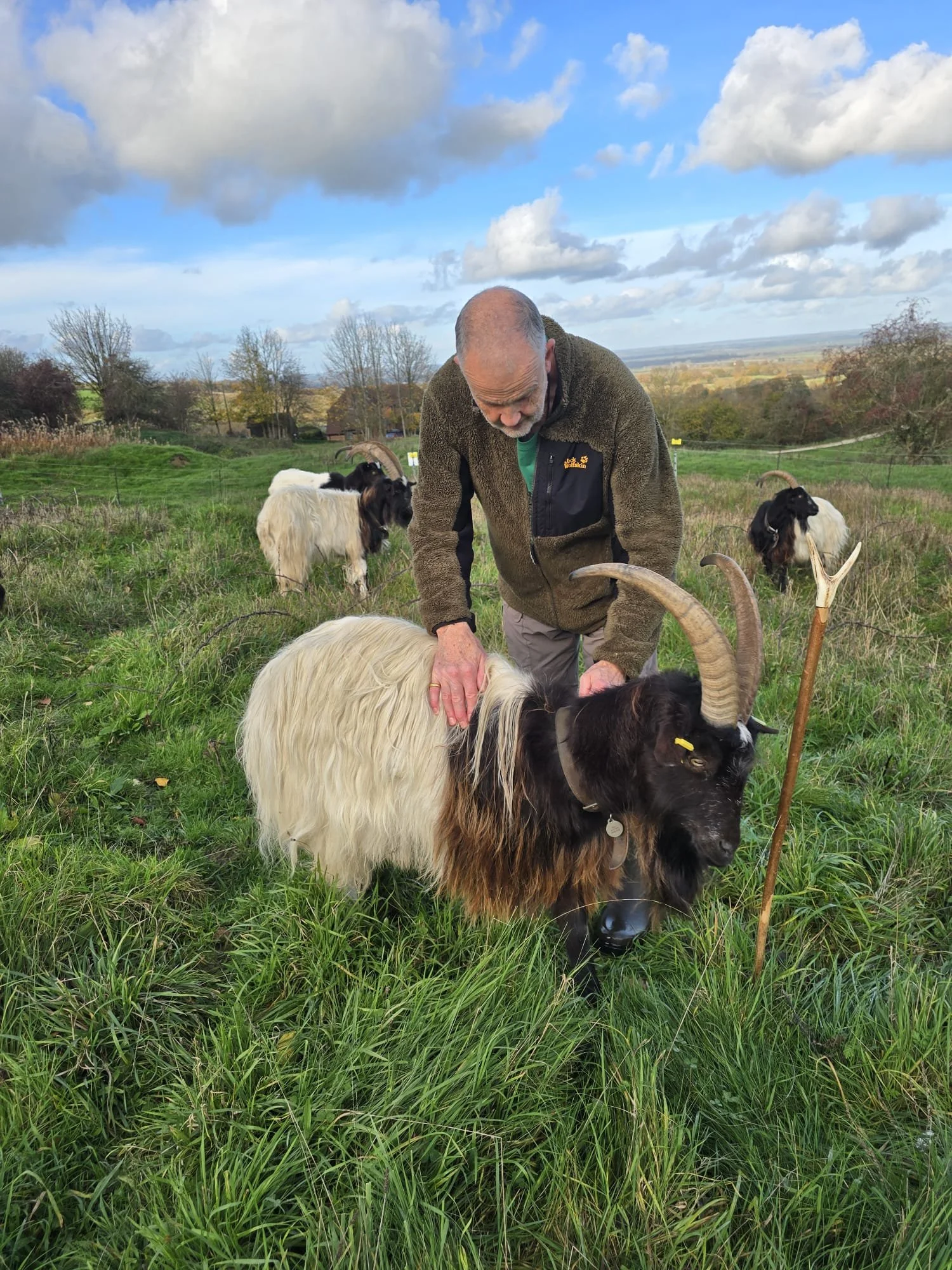
Tim Patrick and Eric (Clacton)
From dung we move onto goats - and what a stunning tribe inhabit Brill Common! The goats are owned by Tim, local man and lover of Blues music who has named each after a famous musician. Hank (one of the original pair of goats) is 17 years of age and Eric, Stevie, Jeff and Jimmi are all 11 years old. The Bagot is a rare breed of goat known for its gentle temperament and ability to graze and clear scrub; an excellent choice for the common. Unlike cows, goats graze by nibbling leaves. They appreciate a varied buffet, with a convenient preference for bramble and dog rose.
There is so much more I could say about the two herds on Brill Common but for now I’d just like to emphasise the conservation aspect; these animals are here to protect and serve the common - and they do an incredible job. This said, the heritage of commons is not just about commoners and their livestock. Commons across the UK include areas of impressive landscape, unique geology, incredible biodiversity - and important human history. Commons must be protected. The herders and Volunteers of Brill Common are already doing this and I endeavour to support everyone involved in my role as Wildlife & Community Ranger.
Please get in touch!
Email me your wildlife questions, ideas for events and walks on the common - and anything else wildlife-related. I’d love to hear from you!
Welcome to Fiona
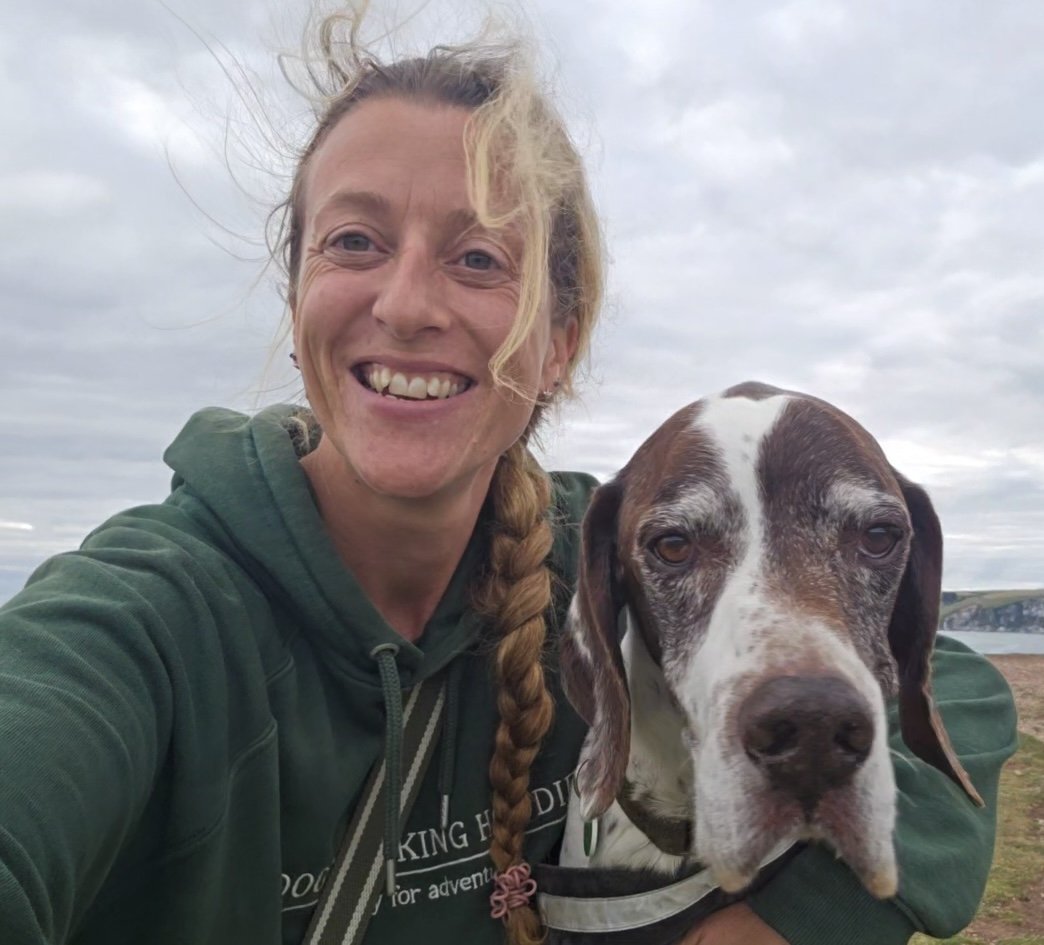
A big Brill welcome to Fiona Bennett-Meere, Brill’s brand new Wildlife & Community Ranger, an exciting new role made possible by the National Lottery Heritage Fund.
A big Brill welcome to Fiona Bennett-Meere, Brill’s brand new Wildlife & Community Ranger, an exciting new role made possible by the National Lottery Heritage Fund. Fiona has been appointed to deliver the 5 year Protect Brill Common Forever! National Lottery Heritage Fund project. She brings a wealth of experience in nature and conservation work, including roles with The Chiltern Society, BBOWT, and the National Lottery Heritage Fund Nextdoor Nature programme.
Fiona is very keen to hear from residents and visitors so please do use the ‘comments’ box below each post or email Fiona your wildlife questions. Please also take 2 minutes to complete this survey to tell us what sort of events and activities you personally would be interested in joining.
Brill Common - free for all?
“I thought the common was common land - ie free for all” wrote someone on Facebook recently. Well, yes - and no!
“I thought the common was common land - ie for all” wrote someone on Facebook recently. Well, yes - and no!
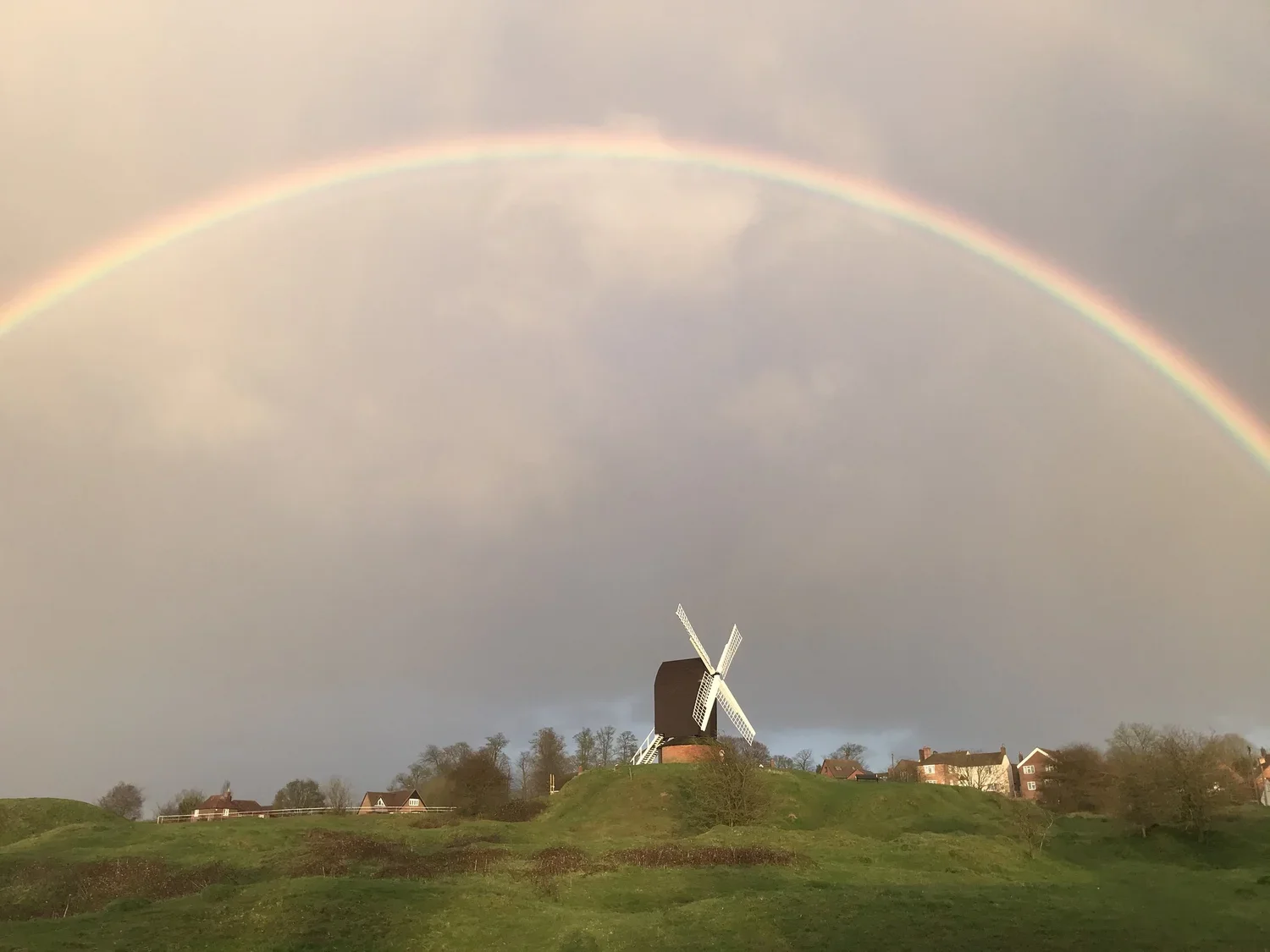
Brill Common, The Walks, The Square and The Green are all owned by Brill Parish Council. The Parish Council holds these parcels of land in trust “for the benefit and enjoyment of all Brill's residents” and our many visitors. As such, the Council has an obligation to protect these open spaces from “damage and misuse”.
The two quotes above are from the Brill Common & Walks Policy*, a detailed document that covers encroachment (annexation of common land, however minimal) and the following topics:
Vehicle access and parking on common land
Track maintenance
Building materials and skips (placement during works)
Planting, grass cutting and weed treatments
Small structures (such as hen coops, boundary markers, tents and benches)
Grazing rights (including the responsibilities of people owning land adjacent to the common)
Events on the common (eg large celebrations and commemorations, fireworks, sporting events and filming including wedding and fashion photography)
ALL of these situations require discussion with, and permission from, the Parish Council - and we strongly recommend you initiate this process as early as possible to avoid misunderstandings and upset. If you’re not sure whether or not you need permission - just ASK! A simple email to the Parish Council will open a dialogue for everyone’s benefit and, provided your request is timely, reasonable and considered, permission is more likely to be given than withheld.
Let’s enjoy Brill Common - and make sure others can do likewise.
(*This document lumps Brill’s four grassed areas together as “common land”. This is not technically correct - but the description is adequate for the purposes of the Policy and its application.)