

Autumn’s Abundance
The soft, silvery seed heads of Traveller’s Joy appear in the hedgerows and Hedgehogs are in foraging overdrive.
This week, my husband and I went to hear Kate Mosse speak at the Henley Literary Festival programme. I adore her writing and, while she is perhaps best known for her historical fiction (including the Languedoc Trilogy, which are personal favourites of mine) she was there to talk about her new book Autumn: The Story of a Season*. This is an exploration of nature, the changing landscape, folklore and history of her native and much-loved Sussex.
Autumn is a deeply special season for me and my family. It was my late father’s favourite time of year, drawn as he was to the changing kaleidoscope of colours across the landscape. It’s since become a tradition for my husband and I to perform our own autumn ritual; spinning in circles and kicking leaves at each other brings out the inner child in both of us!
During spring and summer, leaves are full of chlorophyll, the green pigment that helps trees make food from sunlight. As autumn arrives cooler weather signals trees to prepare for winter. Chlorophyll production stops and the existing pigment breaks down, revealing the vibrant colours beneath – the yellows, oranges, reds and purples that I love so much, before the trees shed their leaves and prepare for their winter dormancy.
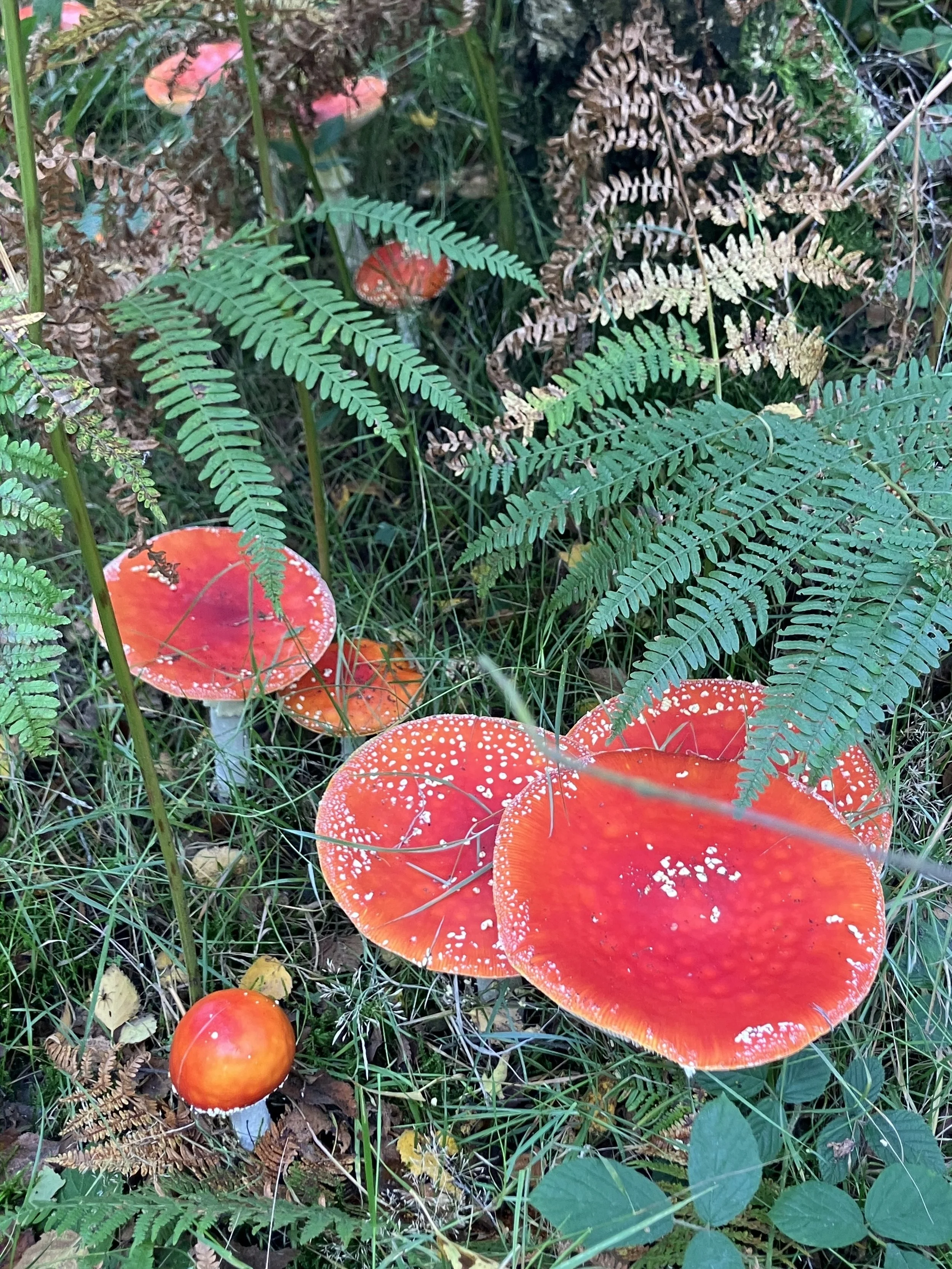
Sloes and Sweet Chestnuts
Near my home, Fallow Deer begin to rut, their haunting calls reverberating across the valleys where we walk the dogs. The soft, silvery seed heads of Traveller’s Joy appear in the hedgerows and Hedgehogs are in foraging overdrive, building up their fat reserves before hibernation begins in November.
Autumn is also a wonderful time for humans to forage. Sloes are ripe for the picking and sweet chestnuts will soon drop (we love roasting them over an open fire outside) - and have you ever harvested rosehips? These can be made into a delicious syrup, naturally high in vitamin C and well worth the effort! During the Second World War, when citrus fruits were in short supply, the Government launched a National Rose-Hip Gathering campaign, with pickers paid 3d for every pound of hips collected.
I love the changing seasons and the beat of nature’s heart reassuring me that everything carries on. There is something rather wonderful about simply being outside, being present and watching it all unfold.
Enjoy Autumn
For tried-and-tested recipes, I recommend and use The Forager’s Calendar by John Wright. Click through the website for a wealth of other information.
*Winter and Spring are also available, written by other authors.

A Day in the Life of Brill’s Wildlife and Community Ranger
There’s a lovely seasonal rhythm to conservation work - and Autumn and Winter is the time for hands-on habitat management.
There’s a lovely seasonal rhythm to conservation work - and Autumn and Winter is the time for hands-on habitat management.
Much of my time in recent months has been spent working alongside volunteers cutting back scrub - usually dense patches of hawthorn and blackthorn. Doing this helps keep areas of grassland open, allowing a wider variety of plants and wildlife to thrive. We’ve also removed selected trees to open up shaded corners or make safe those that lean a little too close to paths.
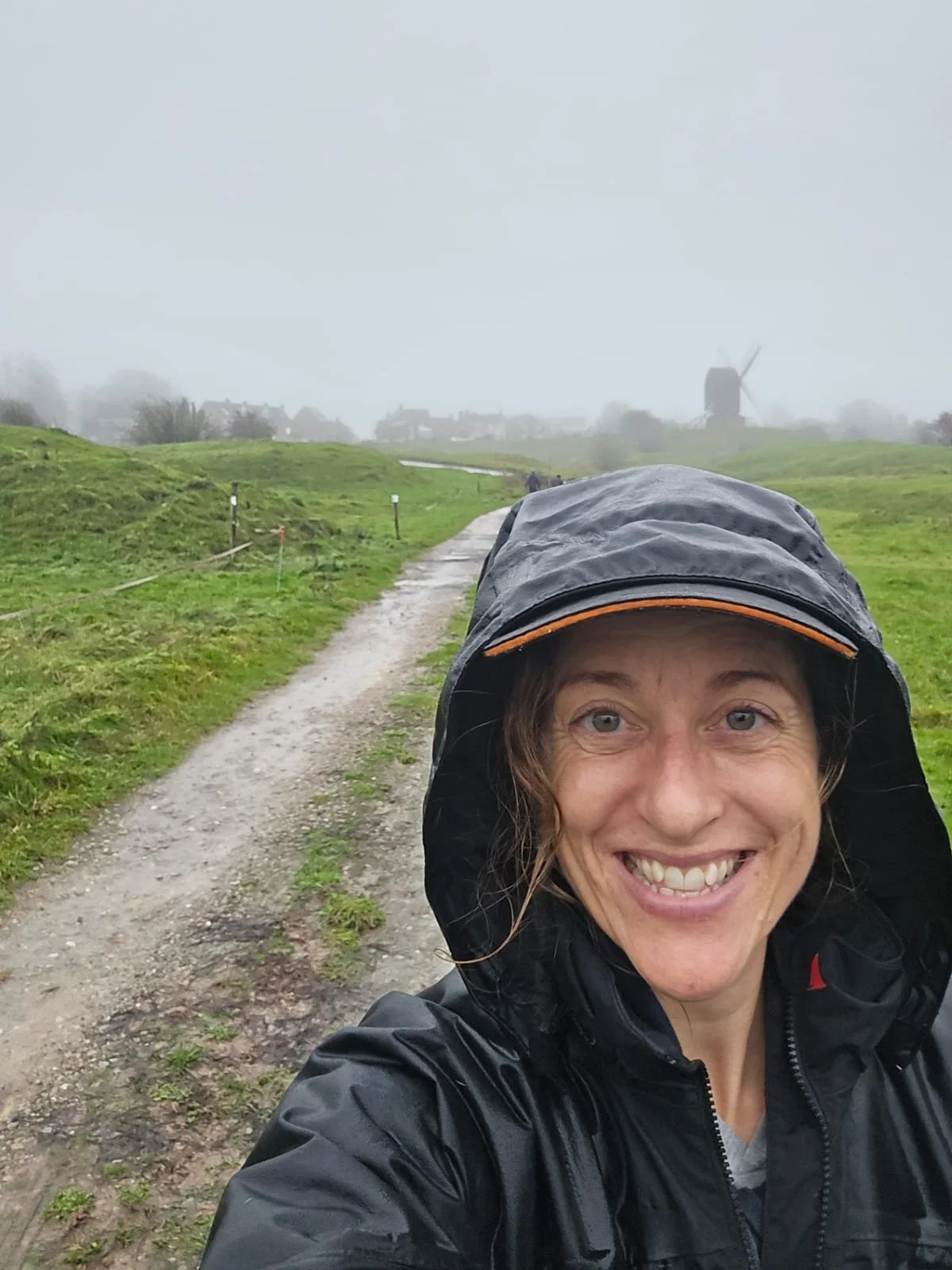
Out in all weathers! Fiona in February rain.
When the cutting is done, the branches and brash find new purpose. Some are burnt, whilst others are woven into ‘dead hedges’; quiet shelters where insects, birds and small mammals can find refuge. We’ve opened up an old woodland glade at the bottom of Tram Hill (on the right, between the road and fields) and one of the volunteers, James - who’s also a parish councillor - created a fantastic dead hedge with the cut material. It’s well worth a look if you’re passing by.
Another on-going task is the clearing of an overgrown boundary fence line. A job that began with removing trees and dense scrub will soon lead to a new post-and-wire fence. Work like this is never done alone and I’m especially grateful to volunteer Tim, who has generously given many hours of his time to help move this project along.
Making connections
In the midst of all this I’ve been meeting with various organisations including BBOWT (Berkshire, Buckinghamshire and Oxfordshire Wildlife Trust) who manage a project nearby. Building partnerships enables future collaboration and could help secure funding for conservation work.
I also have a new role of chief fire-lighter with Brill’s Forest School! Helping children toast cheese sandwiches and popcorn over an open fire never loses its charm and is a gentle reminder that Brill Common is not just a place to manage for wildlife but somewhere people of all ages can come to discover nature for themselves.
Looking ahead
As we move into bird nesting season, my focus will shift. Heavier habitat work will be paused so wildlife can breed undisturbed and I’ll turn my attention to surveys, wildlife recording, and helping people explore Brill Common and learning about the wildlife that call it home.
My programme of events and activities is starting to come together. Many of these will be supported and, in some cases, led by other people. Topics in the pipeline include hedgehogs, swifts, house martins and swallows, and wildlife-friendly gardening and ponds. I’m also hoping to organise guided wildlife walks - plus some introductory sessions on habitat surveys. Watch this space!
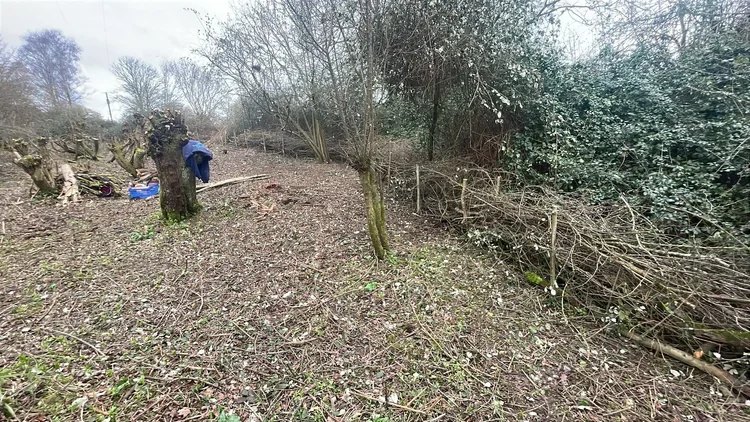
Cleared ground to encourage a variety of plants to grow, and a ‘dead hedge’ of branches and brash to shelter wildlife.
It’s YOUR common - so get involved!
If you have knowledge you’d like to share - maybe by giving a talk or leading a walk - please get in touch. Similarly, if you have a suggestion for a community project involving the common, I’d love to hear from you!
If you haven’t already done so, take 2 minutes to complete my short survey to tell me what events and activities you’d be interested in.
If the sun is shining and you’re got an hour to spare, have a look at my family nature activity sheet. There’s something there for all ages; print it off or follow along on your phone.
Keep an eye on the Protect Brill Common Forever! Facebook page. I’ll be announcing new events there and on the website and on the community notice boards.