Great Crested Newts are back in Brill!
Ponds are one of the UK’s most valuable yet often overlooked habitats. Despite their small size, they provide vital breeding, feeding and shelter for a wide range of wildlife - from amphibians and insects to birds and mammals. They also act as important stepping stones across the landscape, helping species move, survive and adapt in a changing climate.
I knew from chatting with residents that Great Crested Newts have been reported in previous years but we need to know what’s happening right now - so I was delighted when Jen Curtis, a project officer for the Newt Conservation Partnership, and Emily Coulam, RBOR* Nature & Greenspaces Officer at BBOWT, came to Brill to survey our ponds.
A protected species
Great Crested Newts are a fully protected species - meaning their eggs receive the same legal protection as the creatures themselves. Disturbing eggs - or the vegetation to which they are attached - without the appropriate licence is an offence. This is why surveys that involve searching for eggs on aquatic plants must be carried out by licensed ecologists - and why Jen waded in to help!
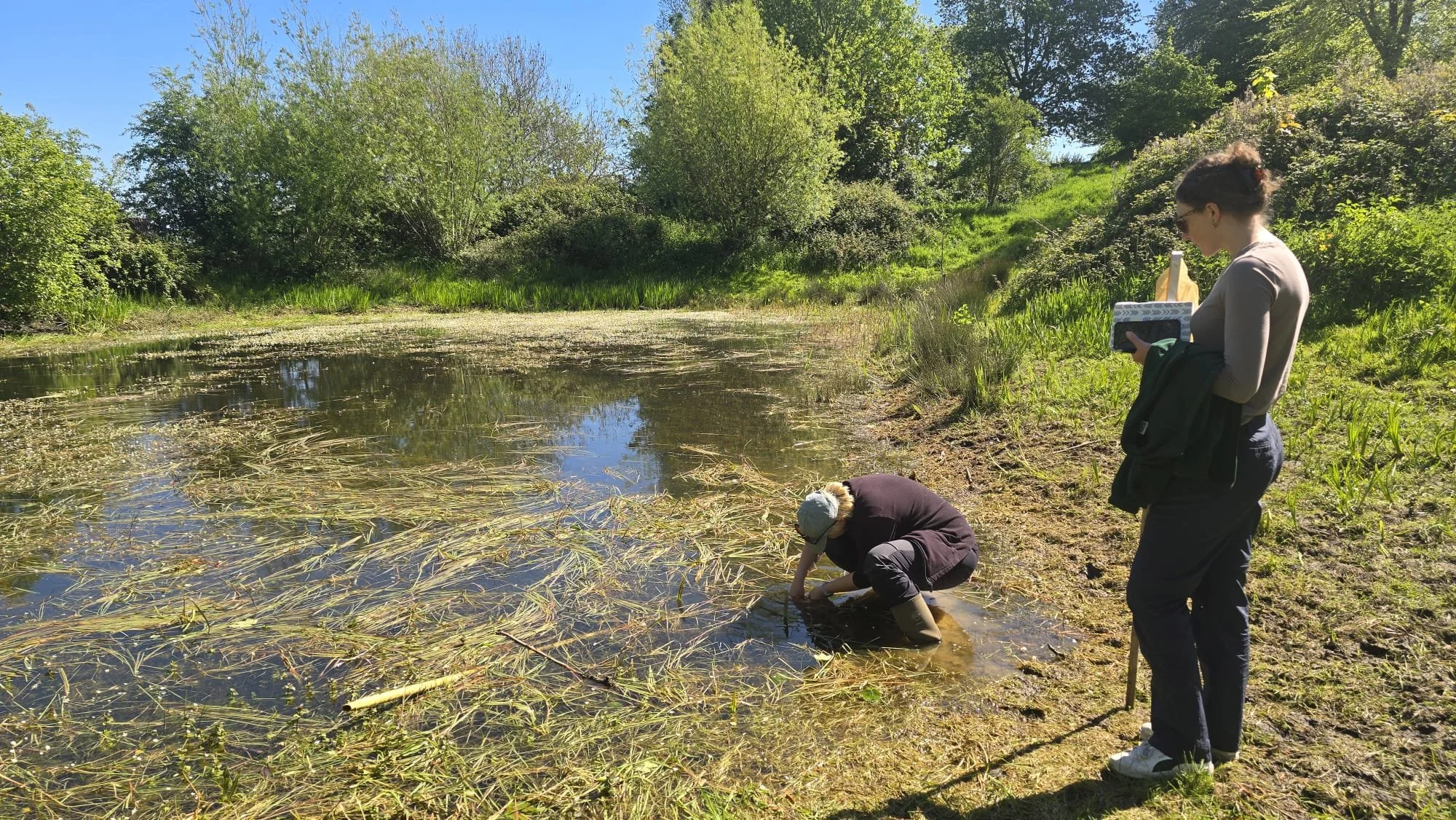
Jen and Emily surveying the pond in The Walks in late April (photo F B-M).
One of the most fascinating behaviours of Great Crested Newts is how females lay and protect their eggs. Eggs are laid on submerged plant leaves in Spring and early Summer, one egg to a leaf. The newt then uses her hind legs to carefully fold the leaf around the egg. This helps shield the egg from predators, sunlight and damage, and is a key sign used by licensed surveyors to confirm breeding activity.
Success!
And guess what? Our surveys revealed numerous Great Crested Newt eggs in both ponds, indicating successful breeding activity this season!
The Walks pond is particularly rich in vegetation, with floating sweet grass, water mint and thread-leaved water-crowfoot. These plants are vital, providing egg-laying surfaces as well as shelter for newts and other pond life. The pond was also teeming with aquatic invertebrates; an important food source for newts, which are carnivorous both in and out of the water.
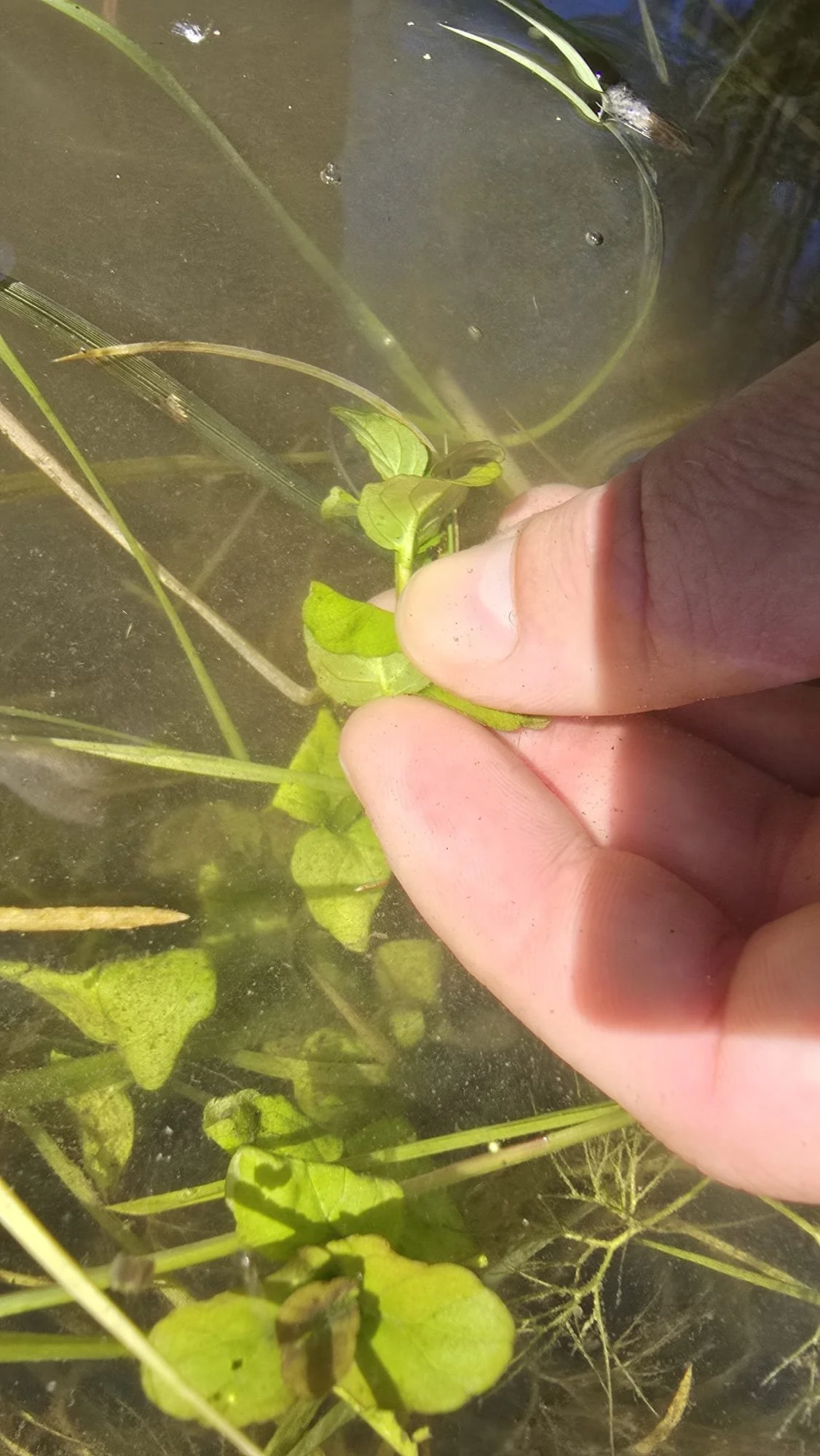
Newt eggs folded in the leaves of water mint in The Walks pond (photo F B-M).
The important bit
This is a crucial time in newt egg development, with newts facing a 50% mortality rate at this stage in their lifecycle. Giving them space can make a real difference so it’s critical the ponds remain undisturbed. THIS MEANS KEEPING DOGS OUT OF THE WATER.
I understand the challenge (I’m a dog owner myself) but if we can protect the ponds until September, when the newts leave the water and return to a largely terrestrial life, we’ll have done something genuinely helpful to support this important species.
*RBOR stands for Reconnecting Bernwood, Otmoor & the Ray, a partnership project supporting nature recovery and community access across a nationally important landscape in Buckinghamshire and Oxfordshire. I’m working with RBOR to develop projects in the area, including in Brill.