I often talk about the importance of human connection with the natural world but today I’m going to consider an even more powerful relationship; that of the tiny Yellow Meadow Ant (Lasius flavus) within its grassland habitat.
You’re probably familiar with the large mounds that dot areas of unimproved and undisturbed grassland (there’s lots on Brill Common) but did you know that each of these mounds is home to a Yellow Meadow Ant colony? A single colony may contain thousands of worker ants - sometimes even tens of thousands. The mounds help regulate the temperature of the subterranean nests - nests which may extend a metre underground - and they grow over time. Some may be centuries old. These facts alone are pretty amazing but wait until you hear how the ants survive beneath their domed palaces: they farm!
Ants and aphids
Deep within their underground nests, Yellow Meadow Ants tend herds of Root Aphids in much the same way that humans keep livestock. The aphids feed on roots of grasses and flowers, extracting sap and nutrients and producing a sugary substance known as honeydew - while the ants protect them from predators, move them to suitable food sources and care for their eggs in winter. Even more incredibly, the ants effectively milk the aphids, gently stroking them with their antennae to encourage the release of honeydew, which they then drink. A remarkable relationship hidden entirely beneath our feet that not only sustains vast colonies of ants but also shapes the habitat above ground…
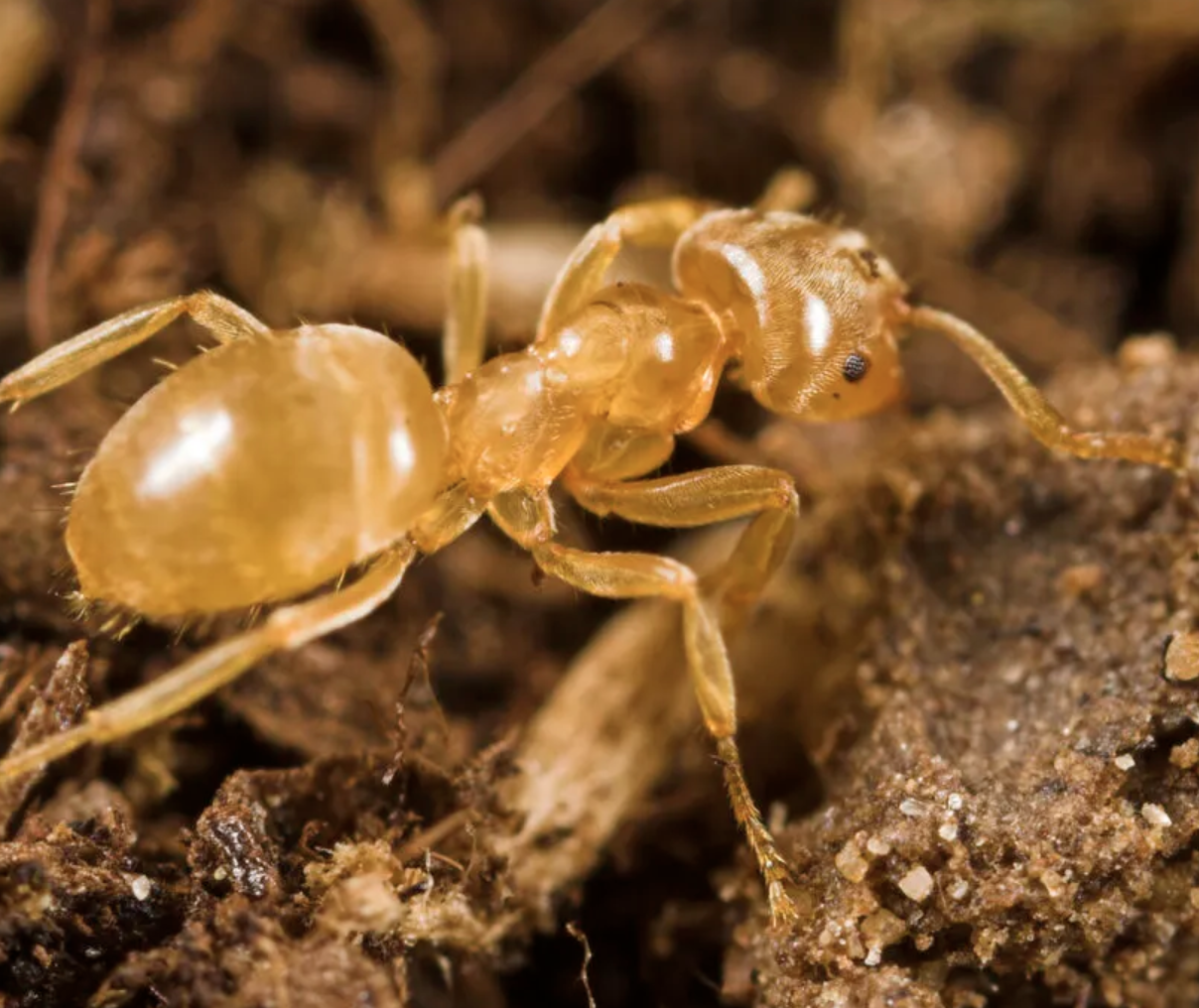
Photo of Yellow Meadow Ant by Paul Richards on Wildlife Trusts website. In real life, just 2-4 millimetres long.
Yellow Meadow Ant mounds create unique patches of habitat characterised by distinctive soil conditions and reduced competition from vigorous grasses. Specialised low-growing wildflowers establish, set seed and thrive on the mound surfaces, creating a multitude of miniature plant refuges across the landscape - and so this tiny unassuming ant supports the rich diversity of life in our ancient grasslands. But such ecological richness depends on healthy, undisturbed soil: intensive management and the use of fertilisers or pesticides dramatically alter the balance of life below ground, weakening the intricate relationship between ants, aphids, plants and soil organisms - and so diminishing diversity above ground.
Creatures great and small
The story of Yellow Meadow Ants is a powerful reminder that some of nature's most important connections happen out of sight. So, next time you see a Green Woodpecker (our little ant friends are their favourite food) and trip over a mound, consider how even the smallest creatures can have a profound influence on the world around them.
PS Another small creature whose work goes unseen is, of course, the earthworm, labouring away beneath our feet to manufacture soil, recycle nutrients and support complex food webs. Watching earthworms in action in a Worm Farm (or ants in an Ant World!) is a wonderful way to introduce children to one of nature's eco-engineers.