The Butterfly Effect
Wildflowers are at their peak and our countryside is a vibrant mosaic of colour, accompanied by the constant hum and buzz of insects making the most of this seasonal abundance. Among the easiest and most rewarding insects to spot are butterflies, with their incredible variety of shapes, sizes and colours.
Butterflies rely on a rich diversity of plants throughout their lives. Caterpillars need specific food plants to grow and develop whilst adults seek out nectar-rich flowers to provide vital energy to fuel their flights, find a mate and survive. Without a healthy mix of larval food plants and nectar sources, many butterfly species simply would not thrive.
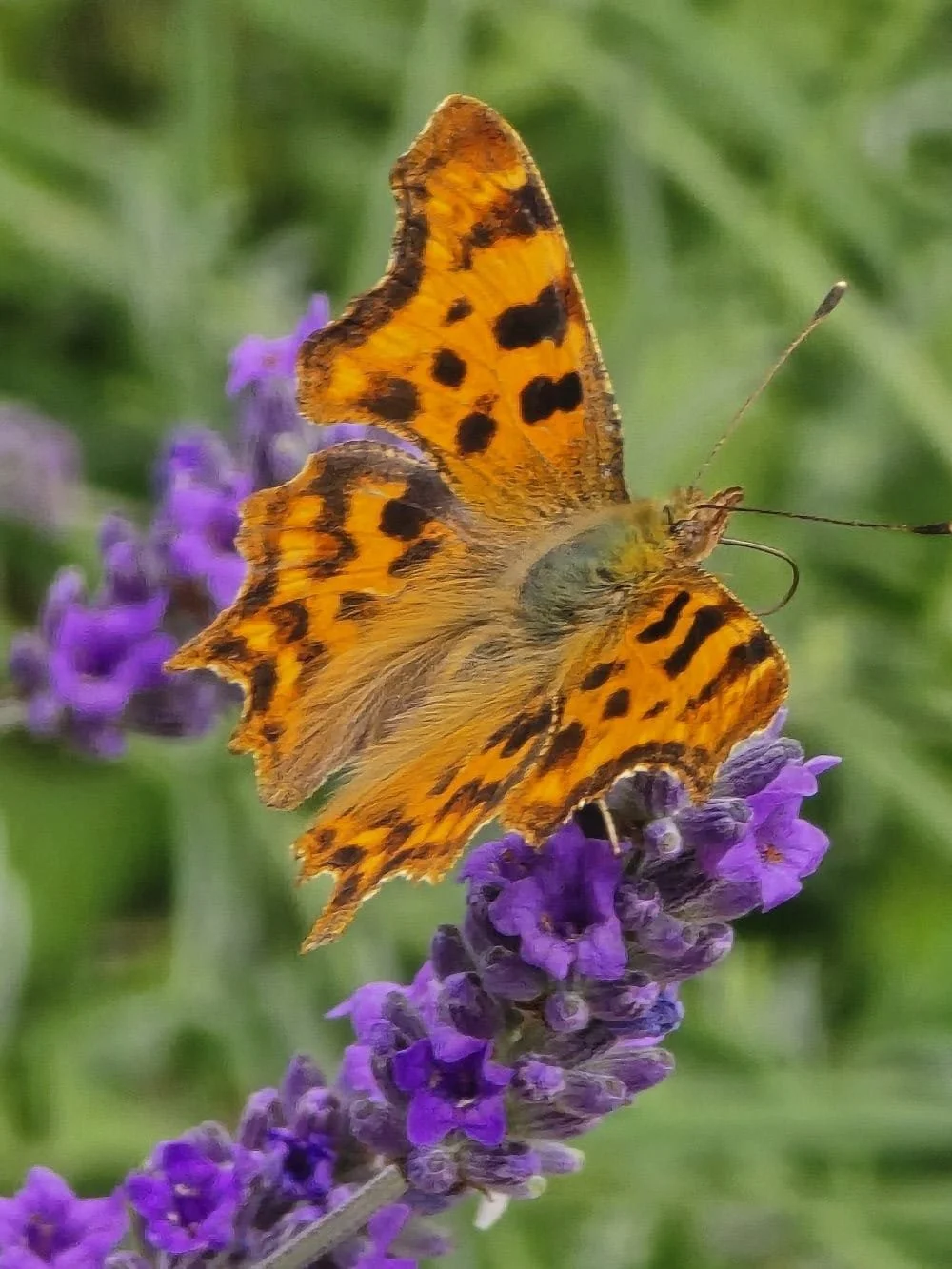
Comma Butterfly on lavender in Fiona’s garden
Butterfly watching
Monitoring butterflies is incredibly important not only to keep an eye on their number and variety but because butterflies are key indicators of biodiversity. An annual record of the abundance and diversity of butterflies helps build a picture of the health of the wider environment.
How are butterfly populations monitored?
We are fortunate to have dedicated volunteers to carry out butterfly transects on Brill Common. A butterfly transect is a fixed-route walk completed every week from April to September. Although each survey has specific criteria, the basic principle is straightforward: every butterfly seen within a standard recording area - an imaginary 5m cube - is identified and counted. The same route and method are repeated each week to produce reliable data that can be compared over time.
This methodology forms the backbone of the UK Butterfly Monitoring Scheme (UKBMS), one of the world's longest-running insect monitoring programmes.
So how can I help?
The annual Big Butterfly Count (website opens in new tab) is about to begin, and they need YOU!
All you have to do is spend 15 minutes in a sunny spot in your garden, on Brill Common, in The Walks or any other open space and record the butterflies and day-flying moths you see. When you've finished, upload your sightings to the Big Butterfly Count website or use the free iOS or Android app. There’s an interactive map on the website showing how your records contribute to a picture of butterfly populations across the UK.
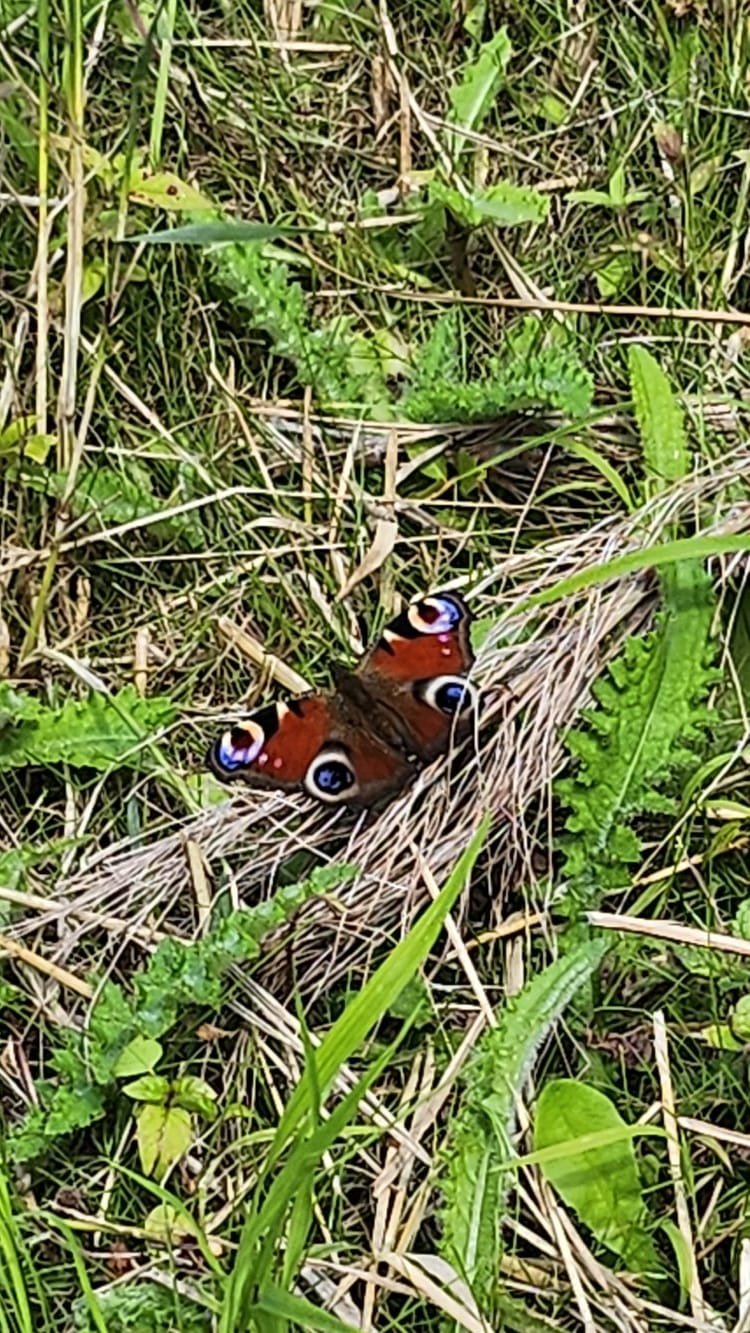
Peacock Butterflies are easy to spot in Brill!
Every butterfly counts, and so does every person taking part - so what are you waiting for? Get outside and get counting!
Resources
🦋 Big Butterfly Count ID Chart for England (pdf opens in new tab)
🦋 Identifying butterflies is fun but can be quite bewildering! This Butterfly Conservation Identify a Butterfly interactive tool is excellent (website opens in new tab).
🦋 A delightful child-friendly spotter sheet (pdf opens in new tab) from Munching Caterpillars (website opens in new tab), the educational arm of Butterfly Conservation. Visit the Munching Caterpillars website for lots of other activities for children and families.
Bitten by the butterfly bug?
Why not build a Butterfly Feeder? Try this simple Wildlife Trust Butterfly Feeder (pdf opens in new tab) - or tackle this slightly more complicated Butterfly Café from the RSPCA (website opens in new tab).