
Drawing by Liz Whiteman for the cover of Brillennium.
Stories & Memories of Old Brill
Brill’s flying bomb, 1944
In the early hours of August 29th 1944 a V-1 flying bomb crashed into the hillside below Brill; a terrifying near miss for the village. Local residents, most sadly now departed, remember the aftermath.
The Missile
Sometime in the early hours of August 29th 1944 in Pas-de-Calais, Northern France (possibly Wallon Cappel, known as Site 623), a small team of German Flakregiment gunners primed and launched a V-1 flying bomb. Over six metres long, armed with 1000 kg (1-ton) warhead, the missile was catapulted skywards and quickly reached its cruising height of 700 metres. Propelled by its powerful pulsejet engine, its course held level and steady by an internal gyroscope, the V-1 crossed the English Channel and made landfall at Dover.
One of the 1,600 anti-aircraft guns positioned on the North Downs tried but failed to shoot it down (which was unusual because their kill rate at this stage in the V-1 campaign was over 75%, thanks to radar) and so, just twelve minutes after launch, the V-1 was approaching the southern suburbs of London.
Wakeful residents would now have heard the unmistakable, sinister thrum of its engine (YouTube opens in new tab) and would have listened, hearts thudding, for it to stop - because that meant the engine had cut out and the missile was commencing its final deadly dive. But this V-1 flew on, over the parks and palaces, streets and slums of central London.
Maybe the launch team, weary after 80 days of bombarding southern England, miscalculated - or maybe there was a glitch somewhere in the 350 hours of slave labour it took to produce the bomb. It’s also possible that the earlier anti-aircraft flack had impacted and caused a malfunction that enabled the rocket to “porpoise” and extend its range (a theory put forward by the late Martin Hassell who worked on guided missiles at Fairy Aviation in Hayes in the 1950s).
Whatever the reason, the bomb passed over Harrow and High Wycombe and crossed the Chilterns.
Many years later, Martin Hassell told his son Jeremy about that night. Then aged eleven and living in Great Missenden in the Chilterns, he was woken by an unearthly roar and a brilliant flickering light. Terrified, he dived under his bed. The noise stopped and he feared the worse but the engine restarted - only to stop and start once more. Moments later, it finally died and the rocket started its descent, startling sleepy cows in the water meadows of Thame, stirring the bells of St Mary’s in Long Crendon, skimming Chilton Hill, smashing through a row of sycamores and slamming into the south-east face of Brill Hill, 800m from the nearest houses. Buried deep in the Kimmerage Clay of the hill, the warhead exploded.
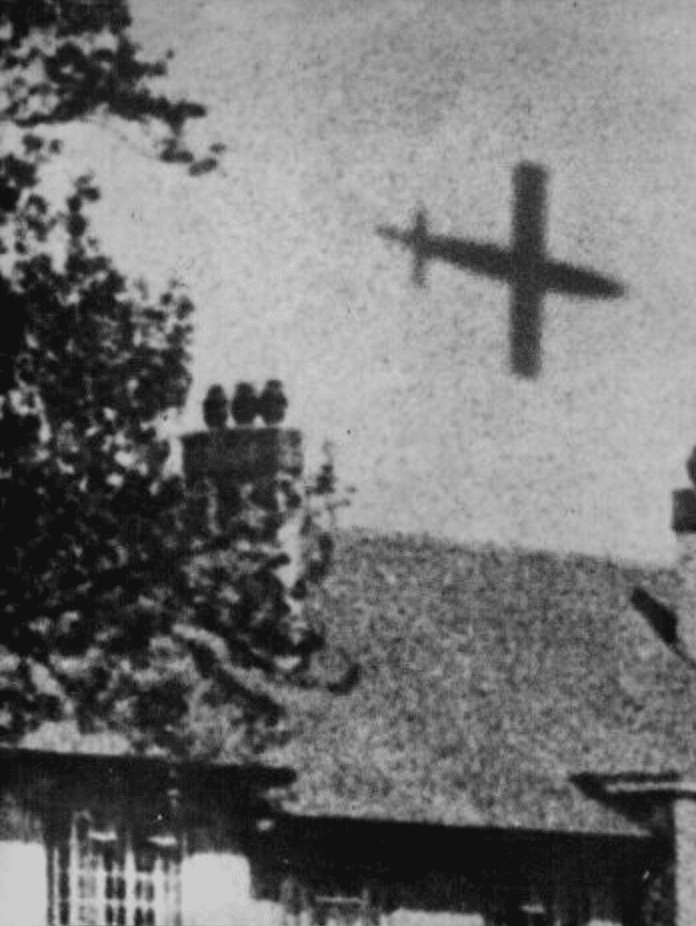
A V1 diving over London (photo from the the History Place website).
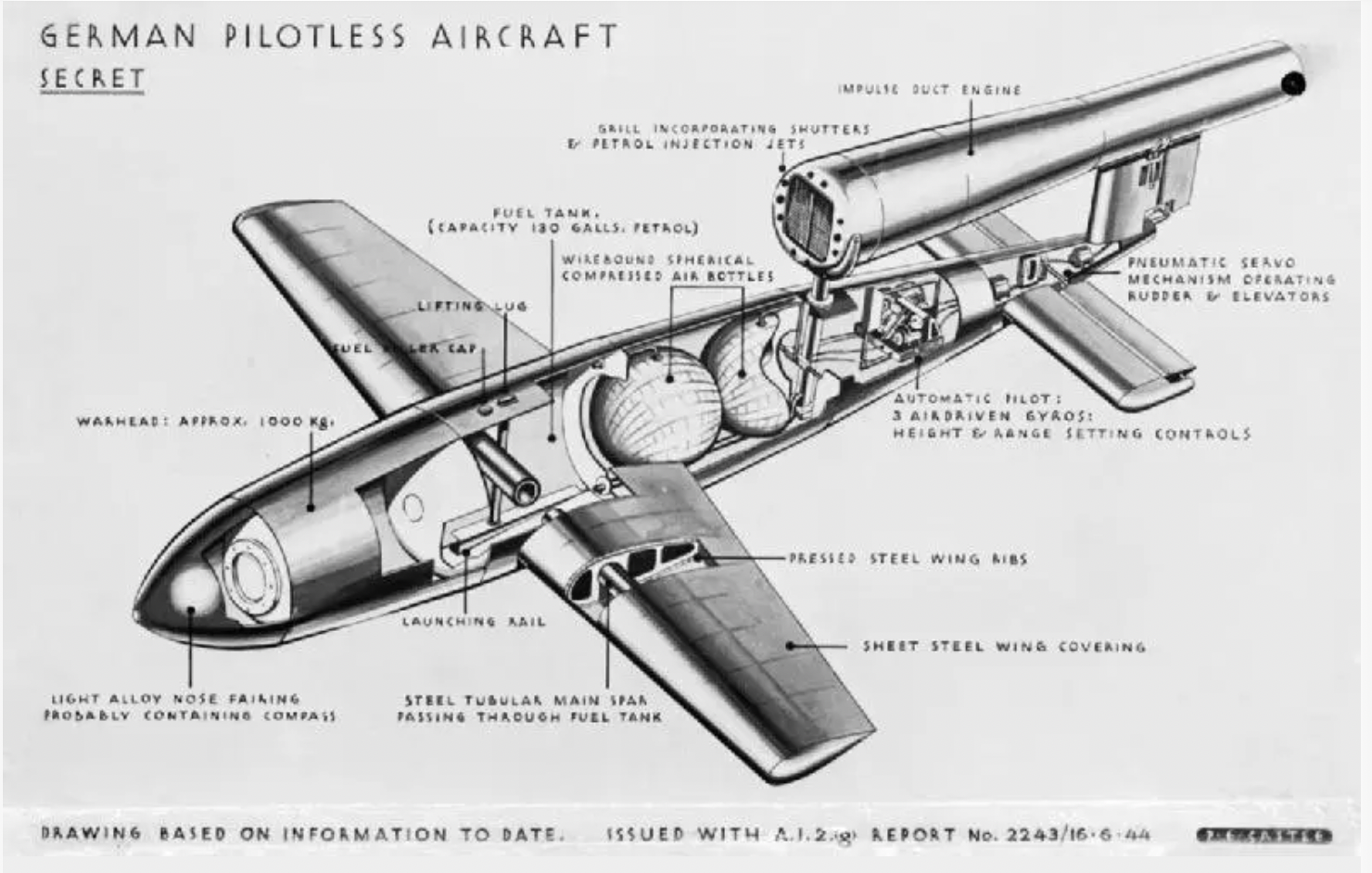
A classified Allied document detailing the inner workings of a V-1 (image from the Military History Now website).
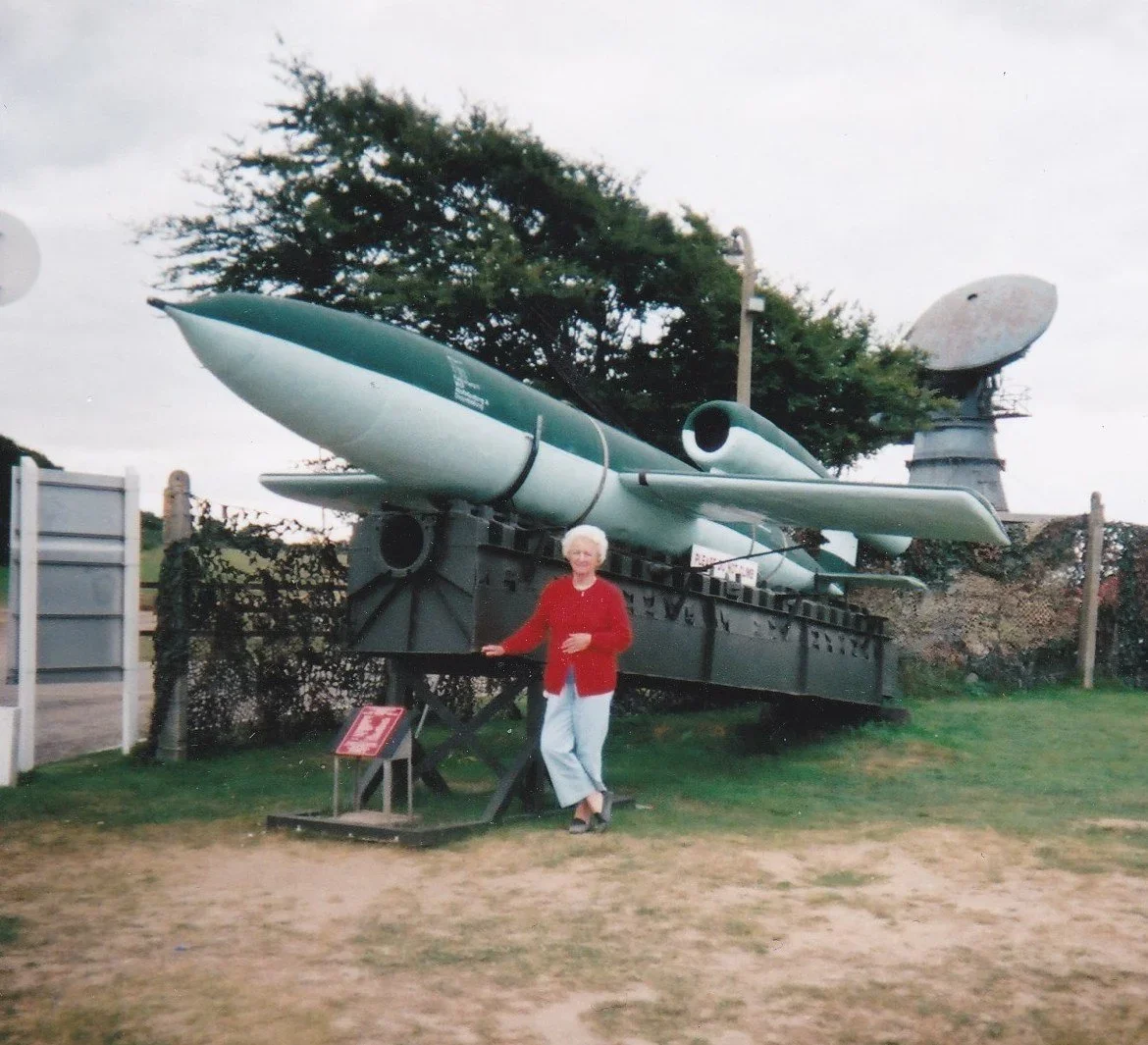
Rose Cadle posing beside a V1 bomb in northern France, long after the war.
A wartime childhood
Rose Cadle’s feature in Brillennium is a delight. Here is the closing paragraph.
At last the war came to an end, the evacuees went home to London, sweets came back again and as I came out of school from my eleven plus exam, Jim [Saunders OBE; Rose’s brother] came whizzing down The Green on his bike. He shouted to me, ‘There’s ice cream at Wilkinson shop’ - best of all after five years!
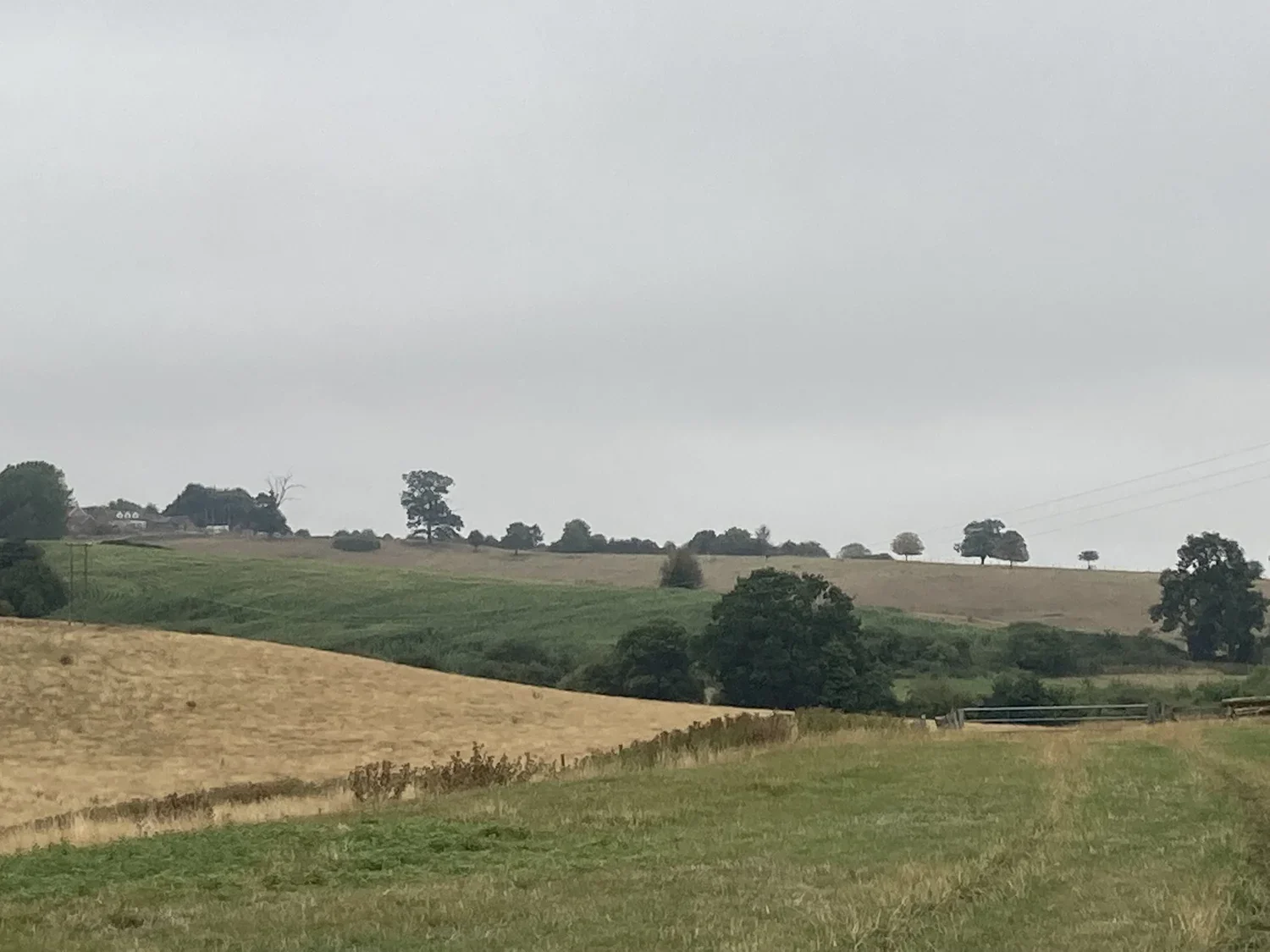
Bomb’s eye view of the approach to Brill, looking NW from the footpath near Chilton Park Farm. The outermost houses of The Firs in Brill Village can be seen top left and the crash site is somewhere to the right of the large tree in the middle distance. (We know exactly but we’re not saying, because it’s on private land.)
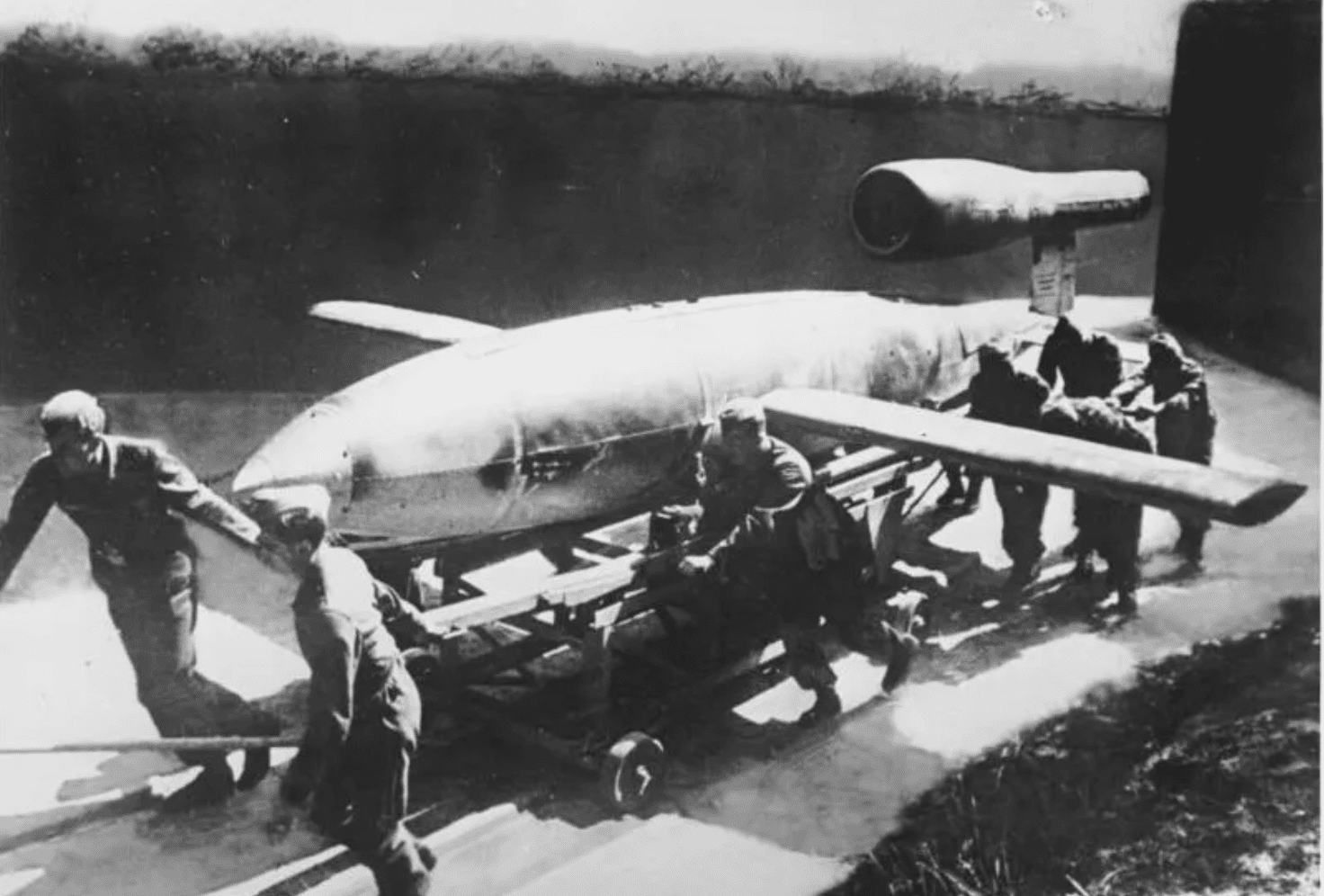
A German crew manoeuvring a V1 (photo from the Military History Now website).
Impact
The explosion shattered most of the windows in Brill - although a young Jim Saunders slumbered undisturbed.
The crater was still smouldering when Brillites Bill King and Tom Cherry investigated a few hours later; Bill burnt his hands climbing down to take a closer look. Both young men were unnerved; a pheasant flew up from the nearby scrub and Tom flung himself to the ground, fearing another bomb.
Fragments of the bomb were scattered all around. Rose Cadel (who was Brill School’s dinner lady for many years) found a long fragment of curved steel in a hedgerow and took it home. There were also leaflets scattered around, bearing graphic images of carnage caused by RAF bombing of German cities.
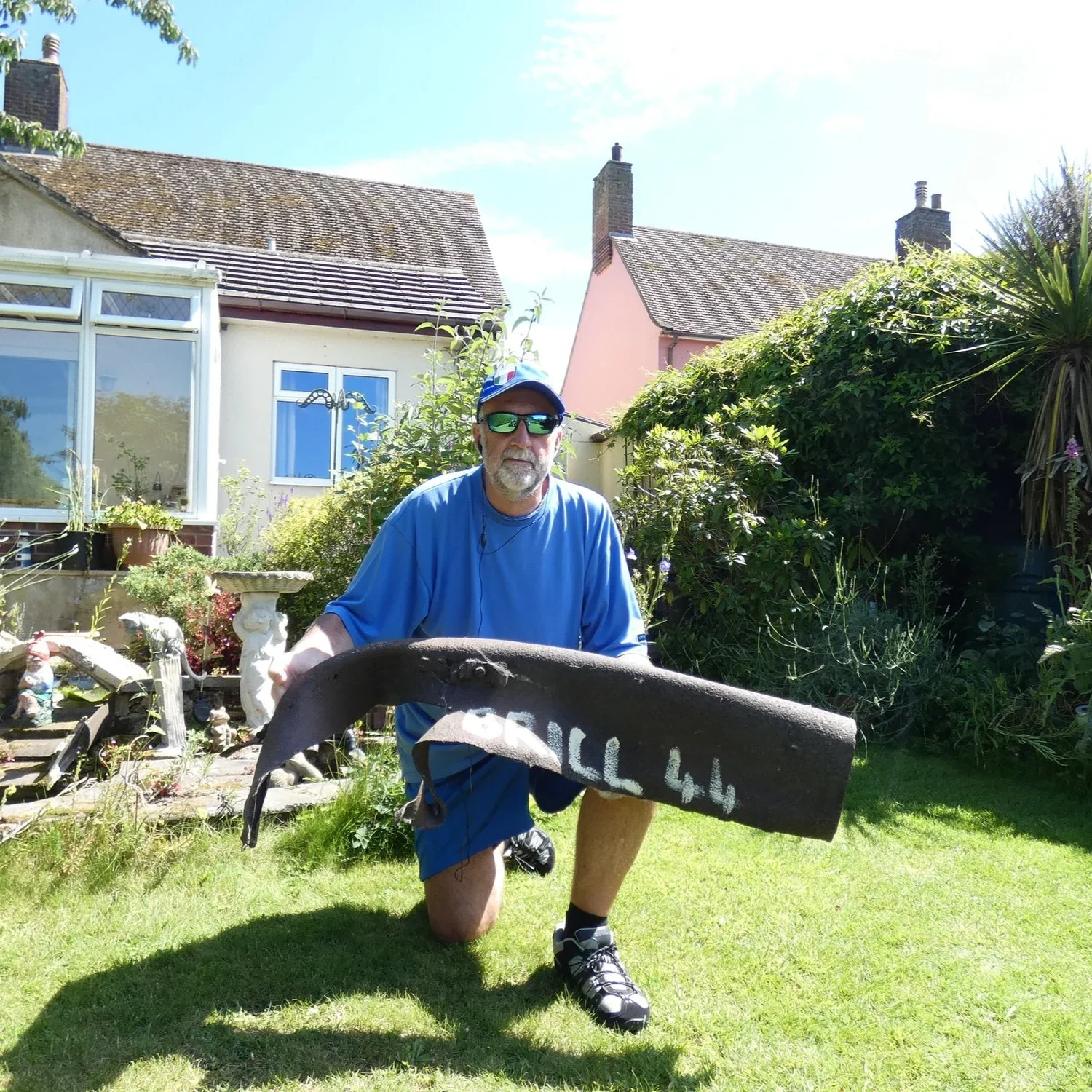
Former Brill resident Calt Blake with a fragment of the V1.
Afterwards
Brill was hit several times by conventional bombs during the War. The Congregational Chapel was badly damaged and local children burnt their hands collecting still-hot pieces of shrapnel but no-one was badly hurt. The V-1 of August 29th was thankfully a one-off; it was also one of the last to hit England (opens in new tab). Paris had been liberated on August 24th and in the following days British and Canadian troops advanced rapidly on the Pas-de-Calais area, causing units of the Flakregiment to withdraw after destroying the V-1 launching ramps.
As August drew to a close there was a feeling that the worst was over - but, in reality, the nightmare was only just beginning. On September 8th, the first V-2 ballistic missile exploded in west London. The supersonic V-2 was impervious to countermeasures and the assault continued until March 1945 when the last launch sites were overrun by Allied troops.
V stood for “vergeltungswaffen” or revenge-weapons. The V-1 and V-2 campaigns were Hitler’s final bid to terrorise British civilians and undermine morale.